

What Causes Of Heart attack In Adults?
MANY people have thanked God for their heart attacks. They have recovered to find a new life with greater satisfactions, more peace. But why do so many of us have to wait until we come with- in an inch of death to learn this lesson? Can’t we learn how to live before the heart attack? I put the question to a famous coronary victim, author and poet Jesse Stuart, who suffered a heart attack some years ago.
“People just won’t listen,” he said. “I wouldn’t listen to myself until the good Lord gave me a heart attack.” Just what is the lesson life is trying to teach? What is the truth to which people won’t listen? It is this: a person’s attitudes towards life, his emotions, are strongly linked to heart attacks.
There are indications that they may be as important as such better-defined factors as overweight, diet and heredity. The heart and the emotions are tied together in language we use daily: heart-broken, heavy-hearted, heartfelt, heartache. Physicians in ancient times considered the heart the seat of the emotions but could not prove it. Modern physicians are at last proving the effect that emotions have on the heart’s behavior.
A recent medical study found emotional stress four and a half times more prevalent in coronary victims than in people with healthy hearts. The coronary victim, says the report, “common tendency towards compulsive striving, self-discipline and hard work. He frequently sets herculean tasks for himself, exceeding his normal capacity and tempo, minimizing warning signals and neglecting prudent rules of health.”
Two heart specialists in San Francisco made a study of two specially selected groups of men. Group A consisted of highly competitive, ambitious men who were constantly fighting dead- lines. Group B men were easy-going, with far less drive.
Seven hundred percent more heart disease was discovered in Group A! In a study of coronary patients at Temple University Hospital, Philadelphia, doctors found “gradually mounting tension” prior to the attack in 49 per cent of the cases and “acute emotional stress’ ‘ just before the attack in 37 per cent. They checked an equal number of non-coronary patients and found no instances of gradually mounting tension, and acute emotional stress in only 9 percent.
One of the patients was a forty-three-year-old machinist in charge of a number of machines in a large workshop, who took pride in keeping them in perfect working order. This is how he described his own “gradually mounting tension”: “Everything was okay until the last few weeks. Then the boss started a speed- up.
The equipment broke down, and as fast as we could rebuild it something else broke. Work used to be enjoyable, but now I hate getting up in the morning. All the knocks I’ve had in life couldn’t add up to this. When I saw my work being smashed to pieces, it broke my heart.
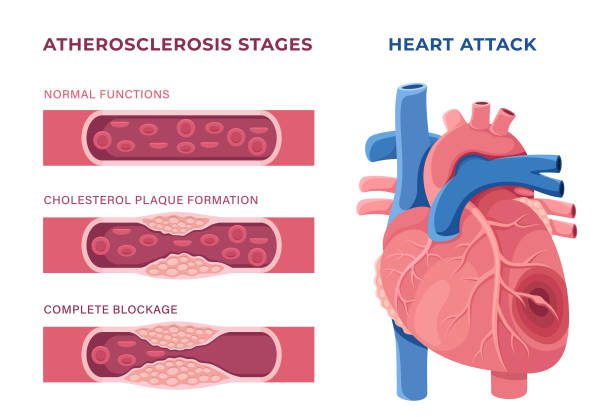
How can emotions break the heart? Under stress of emotion, adrenalin is poured into the blood-stream from the adrenal glands, doctors explain. This causes the smaller arteries to contract. The heart, in an effort to maintain full circulation in the face of this resistance, steps up the pulse rate and blood pressure. When the adrenal secretion causes the coronary blood vessels to contract, the heart muscle is deprived of its full blood supply and the result is pain which we call angina pectoris.
This type of adrenalin response may predispose an individual to actual permanent blocking of a coronary blood vessel-coronary occlusion. Nature intends that shot of adrenalin to provide extra strength and alertness to meet whatever threat brought on the emotional surge. Primitive man found it useful in encounters with wild beasts.
So does modern man when he fights a fire in his basement or snatches his child from the path of a car. But continual tension, repeated emotional emergencies-as though the whole of life were a crisis-is more than nature bargained for.
The damage usually begins long before a heart attack—in the narrowing of the arteries by the formation of fatty deposits in their linings. The process (atherosclerosis) which thickens the inner arterial wall also roughens it, and blood clots form more readily in contact with the rough surface.
Today there is evidence that emotional tension, in addition to its direct effect on the blood vessels as described above, hastens the process of narrowing the coronary blood vessels by interfering with the metabolism of fats and overloading the blood-stream with the fatty substance-cholesterol-which thickens the arteries.
Cholesterol is an essential element of the blood. It is manu- factured within the liver and is also absorbed from the cholesterol contained in certain foods-including animal fats, egg yolk, but- ter, cream and milk-the most valuable of all foods for infants, growing children and undernourished adults.
Cholesterol is not found in fruit, vegetables, cereals or nuts. Lean meat and fish contain a little of it, and provide large amounts of protein, which seems to give the body the power to burn up some of the excess cholesterol in our blood.
Post-mortem examinations made upon thousands of Chinese revealed astonishingly few cases of coronary illness or the atheromatic (fatty deposits in the walls of arteries) which are its forerunners. In China, rice and protein-rich millet and soybeans are the main- stay of millions. Eggs, milk and animal fats are almost unknown luxuries to them. The blood-cholesterol level of the average Chinese is little more than half as high as that of most people in the West.
During the war U.S. Army medical officers were disturbed by the high death rate from coronary disease among American troops (especially the younger men) in training camps in the United States, where the per capita consumption of eggs, milk and fatty foods was far above the average peace-time intake.

British troops, who drank more tea than milk, and ate more bread and beef than ice cream and eggs, incurred a considerably lower death rate from coronary attack. So there seems to be a definite relationship between a high-cholesterol diet and high coronary mortality.
Resistance to coronary disease is very much a matter of heredity, because of the importance of the inborn thickness of the arterial lining, which varies so widely among people of any age group. But the rate at which that lining takes on greater thickness and a rough surface is the deadliest factor in laying the individual open to coronary attack. Some experts believe it can be slowed down through dietary measures.
People vary in their ability to deal with cholesterol. Many per- sons keep their blood cholesterol at safe levels even on food con- taining a great deal of that substance. Others develop fatally high cholesterol on diets practically free from it.
It is well to remember that the problem of human diet is com- plex, that individuals vary greatly in their needs. We all know families whose members live to a vigorous old age on diets that fairly sag with cream and eggs and fats. But they may owe their long lives to a rare combination of congenitally thin coronary linings, some inherited mechanism for burning up surplus cholesterol and a healthy supply of protein in their fare.
A U.S. Air Force doctor tested the blood-cholesterol levels in a group of officers under emotionally placid conditions and later under stressful circumstances. In some, emotional stress caused a remarkable rise. One officer had a cholesterol level, when calm, of 190 (milligrams per 100 milliliters of blood serum).
After he heard that his son had left school to be married, it spurted to 380. Two San Francisco doctors checked the cholesterol levels of a group of accountants: the average was 210. But just before the end of the tax year, when the emotional stress of a tax deadline was upon them, their cholesterol level averaged 252.
What are the outward signs of the man who is building towards a heart attack? (It is most frequently a man. Statistics indicate that the death rate from heart disease in middle age is almost three times as high in men as in women.) Can we identify him in advance? Some doctors think we can select the men among whom coronary disease may develop.
“When one has studied ‘younger’ patients with coronary disease, one knows that they exhibit rather tell-tale characteristics,” say the two doctors, who have encountered many such individuals. “For example, these men frequently use emphatic gestures, particularly the clenched fist, to accompany their talking.
They scan each day in advance to see how much activity they can squeeze into it, and how they can accelerate any project’s pace. They hate to waste time. “When you talk to the coronary-prone man, he often believes he knows what you’re going to say before you’ve actually said it. He will sometimes finish your sentence for you, or his lips will silently finish it, or he may urge you on by saying ‘Yes, yes,’ at intervals.”
In addition to the usually recommended régime of low-fat diet and moderate exercise, the two doctors try to put such patients on a deceleration programme. “Get up early enough so that you won’t have to rush,” they say. “Cut out unnecessary activities, delegate duties that you don’t have to do yourself.”
The doctors use a watch as a symbol of their patients’ trouble. One keeps track of the number of times his patients look at their watches during an interview-it may be as many as sixteen times. in an hour. When he brings this to their attention, they get the point.
Most men can reduce the emotional stress in their lives without sacrificing mental creativeness and the enjoyment of full living. In my hometown, for example, forty-nine-year-old Bill Torno runs a timber-yard. He had a heart attack on March 28, 1955. Now he calls it his “birthday.” “That’s when I learned how to live for the first time,” he says. “Before the coronary I was always on the goI felt that I had to be on top of every detail in the business- and every aggravation, too. Now I get to the yard at eight thirty instead of seven thirty. If I see an aggravating argument building .up,
I just walk away from it. And do you know—the business runs better! I have time to think of the really important things.” Bill Leonard, C.B.S. television and radio broadcaster, who had a heart attack at forty, observed: “Before it happened, I thought there was no excuse for not taking on more work. When a fellow gets older, O.K.; but up to forty-five or fifty he ought to take on anything. Being tired certainly was no excuse.
When Leonard’s coronary struck, he was doing nineteen radio and TV programmes a week. The industry knew him as indefatig- able. After the attack he said: “I simply don’t try as hard, as much or as often. I’m lazier—and it doesn’t bother me. I spend more time just doing things I like to do-playing bridge, taking long walks, and playing golf.”
Life is almost always sweeter for the man who has survived a heart attack. But unfortunately there are thousands who are not shrewd enough to understand their peril before death claims them.