

How to Keep Your Body Cool? Refrigeration engineers are justly proud of the efficient air conditioning units they have developed. But more amazing still are the cooling units which nature has built into our bodies, units so efficient that a man can survive in a 240° Fahrenheit oven that would cook a steak placed beside him.
How to Keep Your Body Cool?
Summer and winter your body acts as a furnace, burning food to produce energy and heat. This creates a problem in temperature control how to preserve a balance between heat production and heat loss, in relation to the surrounding atmosphere.
Laboratory experiments show that the average unclothed male, lying relaxed, maintains an effortless heat balance as long as the external temperature stays between 82° and 88°. This has been called the “masculine comfort zone.” When active and clothed, a man produces more heat and loses less which explains why his comfort zone is near 70°.
Women have a somewhat wider comfort zone. Most women usually have a thicker layer of fatty insulation than men, and hence are more comfortable in cooler temperatures. And the chemical processes which convert food into heat slow down in most women as the temperature rises into the eighties; hence they remain cooler.
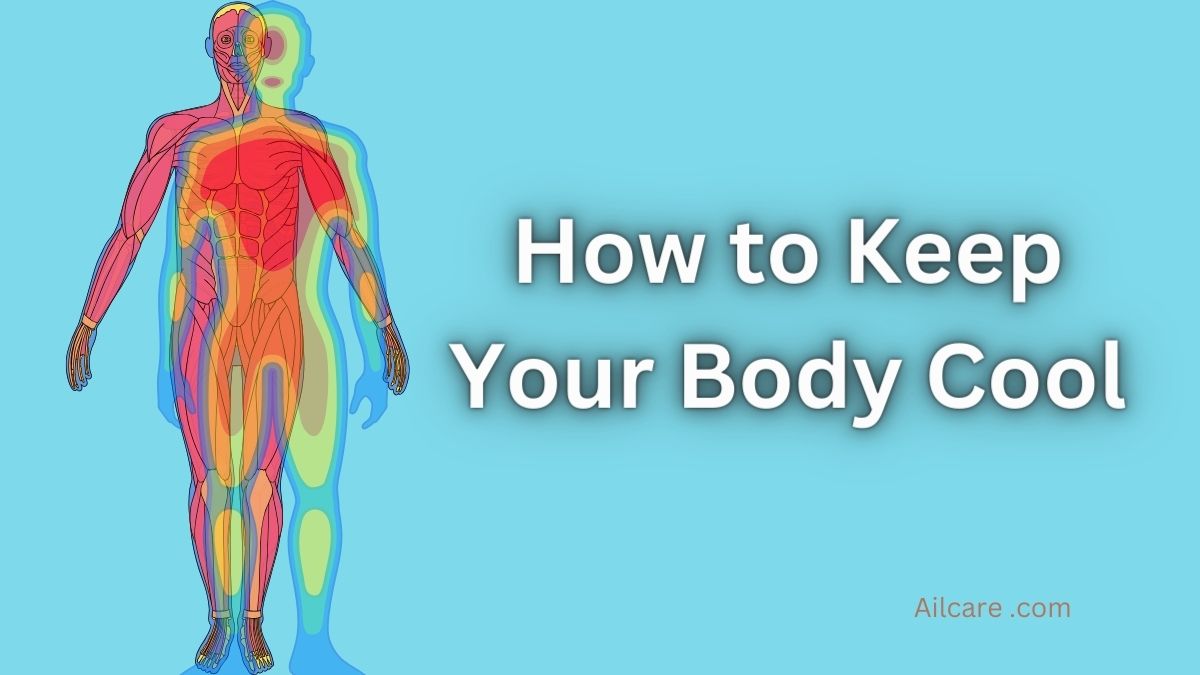
When the outside temperature rises above the comfort zone, remarkable changes occur in the human skin. The changes are made possible by the rich network of blood vessels embedded in and immediately under the skin. In cold weather these blood vessels are contracted and little or no blood flows through them to bring heat to the surface. But as the air becomes warmer or as excess heat is generated inside the body the blood vessels open up and then begin to function like the radiator on a car. Warm blood, carrying excess heat from muscles and internal organs, flows through them and is cooled.
Other changes occur. Fluids stored in your organs and tissues seep back into the blood-stream, increasing the quantity of blood available for cooling. Your heart beats faster, speeding the circulation of the blood and increasing the efficiency of the blood-skin cooling system.
How does your body know when to make the necessary heating and cooling adjustments? One specialist explains it in this way: built into your body are four separate sets of thermometer like devices, two for measuring heat and two for cold. Two sets are embedded in your skin, where extremely sensitive nerve endings signal changes in skin temperature as small as a thousandth of a degree. The other sets, located in your brain, react to changes in blood temperature.
Nerves from all four sets of thermometers lead to a regulatory center near the point where your spinal cord enters the brain. Continuous temperature readings from your skin and brain come to this centre and from it emerge orders demanding changes in your rate of heat production and blood circulation.
The blood skin system works when the air is cooler than the skin. When the air is warmer, the body has another means of cooling itself: the evaporation of sweat, which carries off the heat. (Sweat is a scientific term for what polite people call perspiration.) Profuse sweating is a method of cooling peculiar to human beings and horses-even apes and monkeys lack it.
A study has been made of a boy who was born without sweat glands. Whenever the temperature rose into the nineties, he ran a fever. He could play active games only if water was sprayed on his shirt. The resulting evaporation cooled him.
The capacity of human sweat glands is almost incredible. You can sweat as much as a quart or more an hour, for five or six hours, provided you drink plenty of water. How much sweat evaporates from your skin depends in part on the relative humidity. Dry or “thirsty” air picks up the moisture from your skin rapidly, and you have little trouble in keeping cool. Here a remarkable property of air serves you in good stead: the warmer the air, the more moisture it will hold. Air saturated with water vapor at 70° becomes thirsty again when warmed to 90° or 100°.
Doctors at Indiana University have carefully measured the importance of relative humidity in hot weather. They found that when the air was dry, student volunteers could perform heavy labour for six hours continuously at a temperature of 122°. In humid air the same work quickly exhausted them if the thermometer rose above 90°.
How to Keep Your Body Cool?
When you are working or playing outdoors in the sun during hot spells, a white jersey or tennis shirt is likely to be cooler than no shirt at all. It gets soaking wet, thus distributing the cooling evaporation, and it reflects some of the sun’s light and heat away from your body. Thus the tennis player who keeps his shirt on not only being modest and avoiding severe sunburn, he is also increasing the efficiency of his cooling system.
In temperate climates, most people sweat only a little except during the summer months; thus their sweating mechanism becomes rusty with disuse. That is why the first few days of hot weather are the most uncomfortable. Sweat may pour from your forehead and a few other places, but this “spotty” sweating is inefficient. Later on, sweating becomes more general, and dis- comfort decreases proportionally. Moral: don’t overdo it during the first hot summer days.
What is the highest temperature the human body can survive?
Two doctors at the University of California have collected examples which come close to duplicating the experiences of Shadrach, Meshach and Abednego. One worker in a kiln stated that he is often exposed for two or three minutes to a temperature of 250°; on several occasions he weathered exposures to 500°. A plastics engineer spends ten minutes out of every thirty in an oven at 200°.
In their own engineering laboratories, the two doctors subjected two volunteer undergraduates to high temperatures as part of an air force research project. Both students stayed for more than an hour at 140° with no ill effect, and one stayed for twenty-five minutes at 240°. (A thick steak in an oven at a temperature of 240° will be ready to eat at that time.) The students’ rectal temperature never rose above 101.1°. Sweating kept them relatively cool inside. Oral temperatures averaged one degree lower than rectal temperatures.
Incidentally, the notion of a temperature of 98.4° as “normal” is a myth, conjured up by early makers of clinical thermometers. “In place of the arrow pointing to 98.4°, thermometers should be redesigned to show a broad ‘normal range’ from 97′2° to 99′5°, says a specialist. “Such thermometers would save worried mothers many a sleepless night, and tired doctors many unnecessary calls.”
The body’s last line of defence against heat is panting. While panting is a highly efficient cooling system for dogs, it is a danger signal in human beings. If you find yourself panting from heat (not exercise), lie down in the shade and cool off. How can you help your own body to stay comfortable and healthy when the mercury soars?
How to Keep Your Body Cool?
(1) Drink plenty of liquids, so that you’ll have plenty of moisture for sweating. Do not rely on thirst as a guide; it sometimes lags behind need. Drinks may be cold or warm.
(2) Increase your salt intake to replace the salt lost through sweating.
(3) Relax; the amount of heat you produce depends on your muscular activity.
(4) Use fans to circulate air indoors, but don’t sleep with a fan aimed directly at your body. Place the fan, tilted upward, at the foot of the bed.
(5) The sweat glands of babies and small children have limited capacity; youngsters therefore are more vulnerable to heat ex- haustion. In very hot weather, if children are fitful, keep their heads moist by covering them with a wetted cap or handkerchief. (Keeping your own hair wet is a good idea, too.)
(6) Avoid too much exposure to the sun at one time; it can lead to sunstroke. (Older people and those who have been ill should be especially careful about over-exposure.) Be alert for symptoms of approaching heat prostration: dizziness, faintness, weariness and nausea. When these occur, it is time to call a halt to activity. Get out of the sun, relax and sponge yourself with cool water.
How to Keep Your Body Cool? How to Keep Your Body Cool? How to Keep Your Body Cool? How to Keep Your Body Cool? How to Keep Your Body Cool? How to Keep Your Body Cool? How to Keep Your Body Cool?
Topics of General Science & Ability (CSS)