
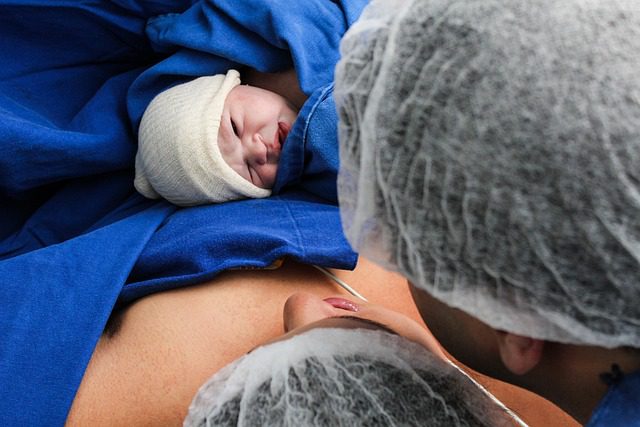
How Bonding with Your Unborn Baby? This small, squirming object is a new-born baby. One of the thousands born daily, he resembles every other new-born. Yet he deserves attention, for there never has been and never will be another baby exactly like him. He is a brand-new person, different from either of his parents and something other than a blend of both. He is unique .Biologically, however, new-born babies do have common characteristics. This baby weight an average seven pounds two ounces, and is about nineteen inches long. (If the baby had been a girl, it probably would have been two-tenths of a pound lighter.)
He looks top-heavy, and his head is remarkably large almost a quarter as long as his entire body. His seven pounds are concentrated in this big head and in the other disproportionately large part of his body, his abdomen.The baby’s arms and legs are ridiculously short. His bones, composed mainly of cartilage, are soft and almost rubbery.
His backbone is so elastic that, if he were put in traction, it could be stretched out another couple of inches. His wrist-bones are not even formed. There is an open spot in his skull called the fontanelle, but it is covered by an extremely tough membrane which protects his brain. His muscles are poorly developed; they haven’t been used much and are soft and flabby-a condition which he sets out to rectify almost immediately by doing an extraordinary amount of squirming.
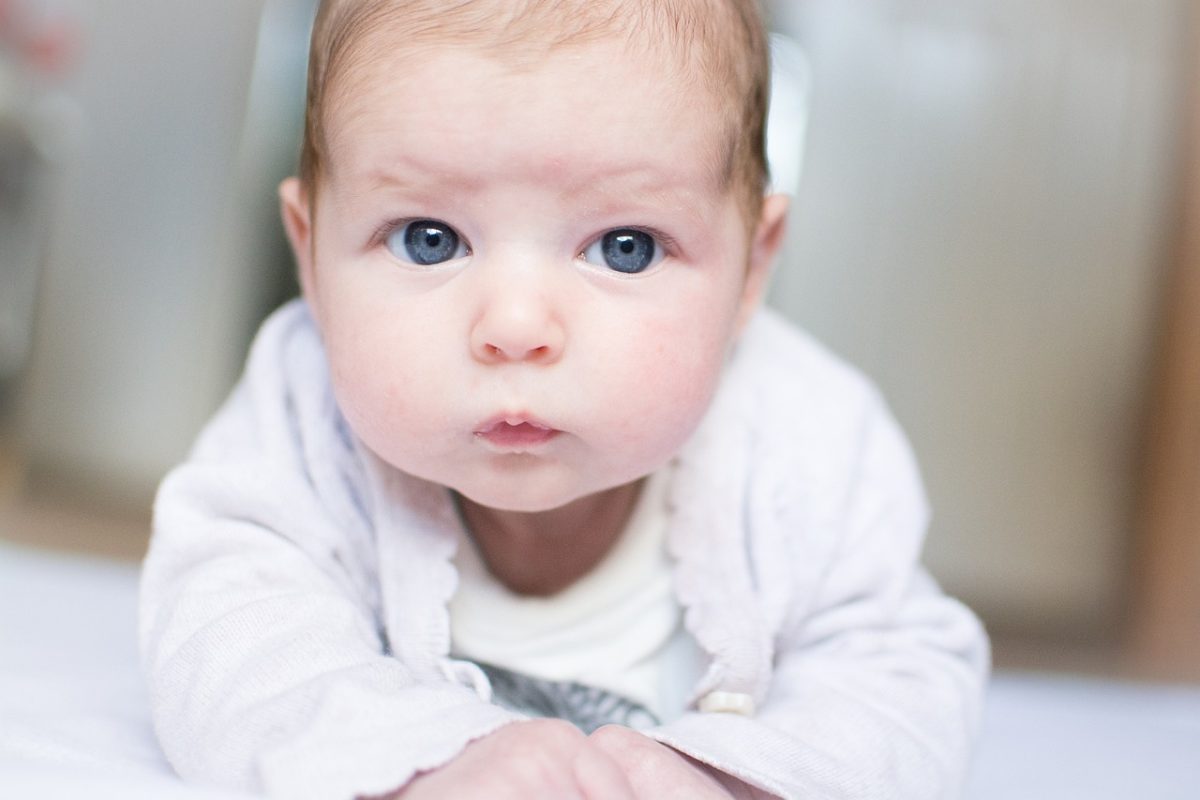
His eyes are blue Gray, no matter what colour they are going to be. They will not acquire their individual pigmentation for another ninety days or more. His temperature at birth is slightly higher than normal, and since he’s naked and wet, and since evaporation produces sudden order to survive. He is, in fact, the most helpless of all new-born chilling, he must be swathed in blankets almost immediately in creatures.
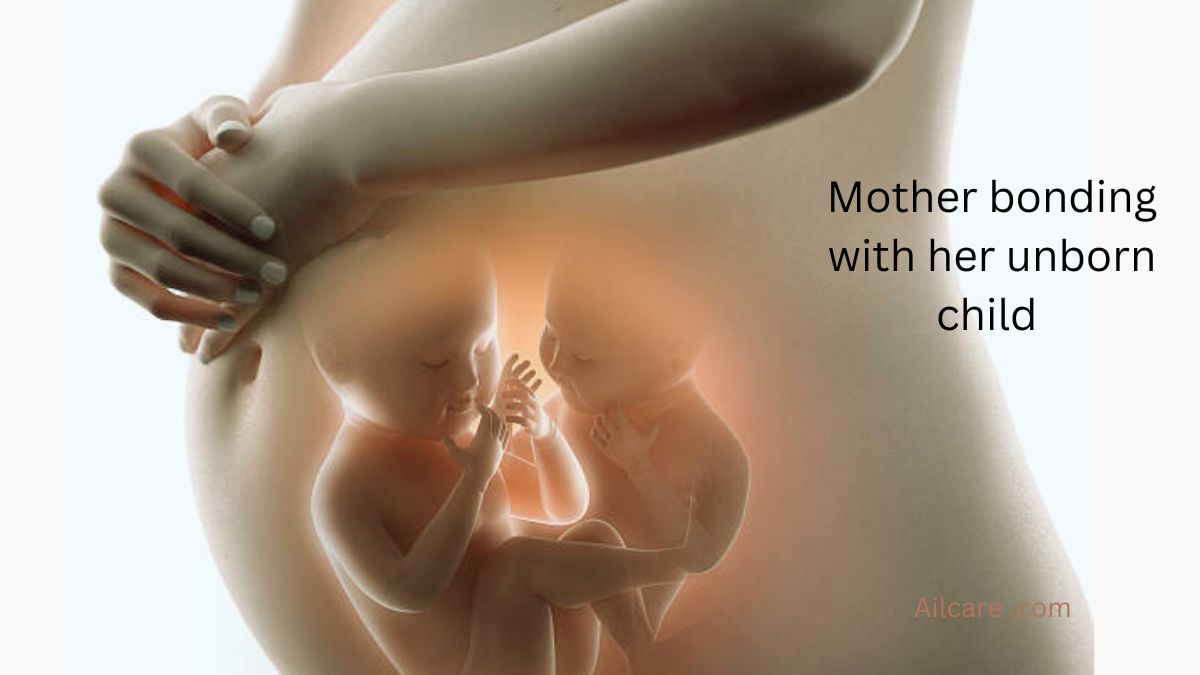
Yet this baby is considerably tougher than he appears. He has already lived through a good deal. The Chinese system of counting age gives a baby credit at birth for having lived a full year. It considers his nine months of antenatal life as equivalent to any subsequent twelve, and certainly they were as eventful. None of the changes in store for the new-born quite compares with the drama of his development from a single fertilised cell to a well organised many-million-cell individual.
How Bonding with Your Unborn Baby important thing
That is the main thing to understand about the baby’s birth: it is not an abrupt beginning. Except for crying, yawning and sneezing, which he can perform for the first time today, he has been interacting his entire repertoire for months-sometimes with marked Igor, as his mother is well aware. The new-born baby has to cry within a minute or two after delivery in order to start breathing air.
This cry is an emergency gasp, a bellows-like action of his diaphragm which sucks air into his lungs and drives the fluids out of his nose and throat. The noise he makes is entirely incidental; his vocal cords just happen to be there, and the air rushing past them sets them in motion. Now, having established breathing with his first cry, the baby is prepared to cry for a host of other reasons-such as hunger, followed closely by wet nappies.
Then, as he learns that crying brings help, he develops a vocabulary of shrieks, whines and grunts, which his mother soon understands, even if no one else does. Besides crying, he can grimace, smile and scowl. But his expressions only seem to have meaning. They are attributable to his rapidly adjusting nervous system; he is simply trying on various faces for size rather than portraying emotion.
He also has a number of reflex reactions to discomfort or pain. He can shiver. If he is pinched he will draw away. Put him face down and he will turn his head to one side so that he can continue to breathe. He hates to have his head held still or his hands held against his sides; in either case he will struggle with surprising violence to work himself free. His strength on such occasions is comparable to his extraordinary grasping ability.
His grip is so strong that if a rod is put into his hand he will grasp it and hold on while he is lifted off his bed. He may hang from it with a one hand grasp for as long as thirty seconds. This grasp is a pure reflex; it will disappear in a few months when he begins to coordinate his hand movements with what he sees. He can blink his eyes, although he doesn’t do so until his eye- ball is actually touched.
How Bonding with Your Unborn Baby
It will take time for this protective reflex to develop to the point of making him blink, as grown-ups do, when somebody makes a threatening motion. Perceiving light is about the best his eyes can do, although within sixty days he will be able to recognise a number of familiar objects. Probably the first sensations he feels, however vaguely, have to do with his sense of touch.
But it is his skin that is sensitive rather than his finger-tips. When, after a few weeks, he begins to explore the world around him, he will start by feeling things with the palms of his hands, not his fingers. As a more reliable method, he will try to taste things, for of his five senses taste is the best developed. While he may not distinguish clearly among sweet, sour, salt and bitter, he reacts to them he likes them or he doesn’t about as emphatically as an adult.
But this new-born baby amounts to much more than all these physical facts. He brings something unique into the world with him: his heredity, present physically in every cell of his small body in the form of genes. These genes are his inborn endowment, not only from his parents but from all his ancestors back through history.
They have determined not only his sex, his size and how much his nose today looks like his father’s, but they have directed his development from a single cell-a cell startlingly similar to the first cell of every other creature-into a human being rather than, say, a dog or a hamster. Above all, they have established the potentialities for his unique personality. No matter what his future environmental influences may be, he is the only person in the whole world with exactly this set of genes.
But the most impressive and accurate way of looking at this new-born baby is to consider him as a being in the midst of an almost incomprehensibly rapid process of growth. His capacity for development is unparalleled. For most of the coming year his rate of learning will be slightly inferior to that of a baby chimpanzee. From then on, however, the contest is over. After the age of one year he will race ahead into a realm where no other creature can follow.
His power to perceive and to act will go on growing for decades, and his power to understand will increase until the day he dies. At the pinnacle of his capabilities his brain will be able not only to assimilate an infinite variety of ideas but to arrange them in patterns and draw conclusions and proceed, perhaps, towards answering the greatest of all questions: “What is Man ?”
How Bonding with Your Unborn Baby How Bonding with Your Unborn Baby How Bonding with Your Unborn Baby How Bonding with Your Unborn Baby How Bonding with Your Unborn Baby How Bonding with Your Unborn Baby How Bonding with Your Unborn Baby How Bonding with Your Unborn Baby How Bonding with Your Unborn Baby How Bonding with Your Unborn Baby How Bonding with Your Unborn Baby