
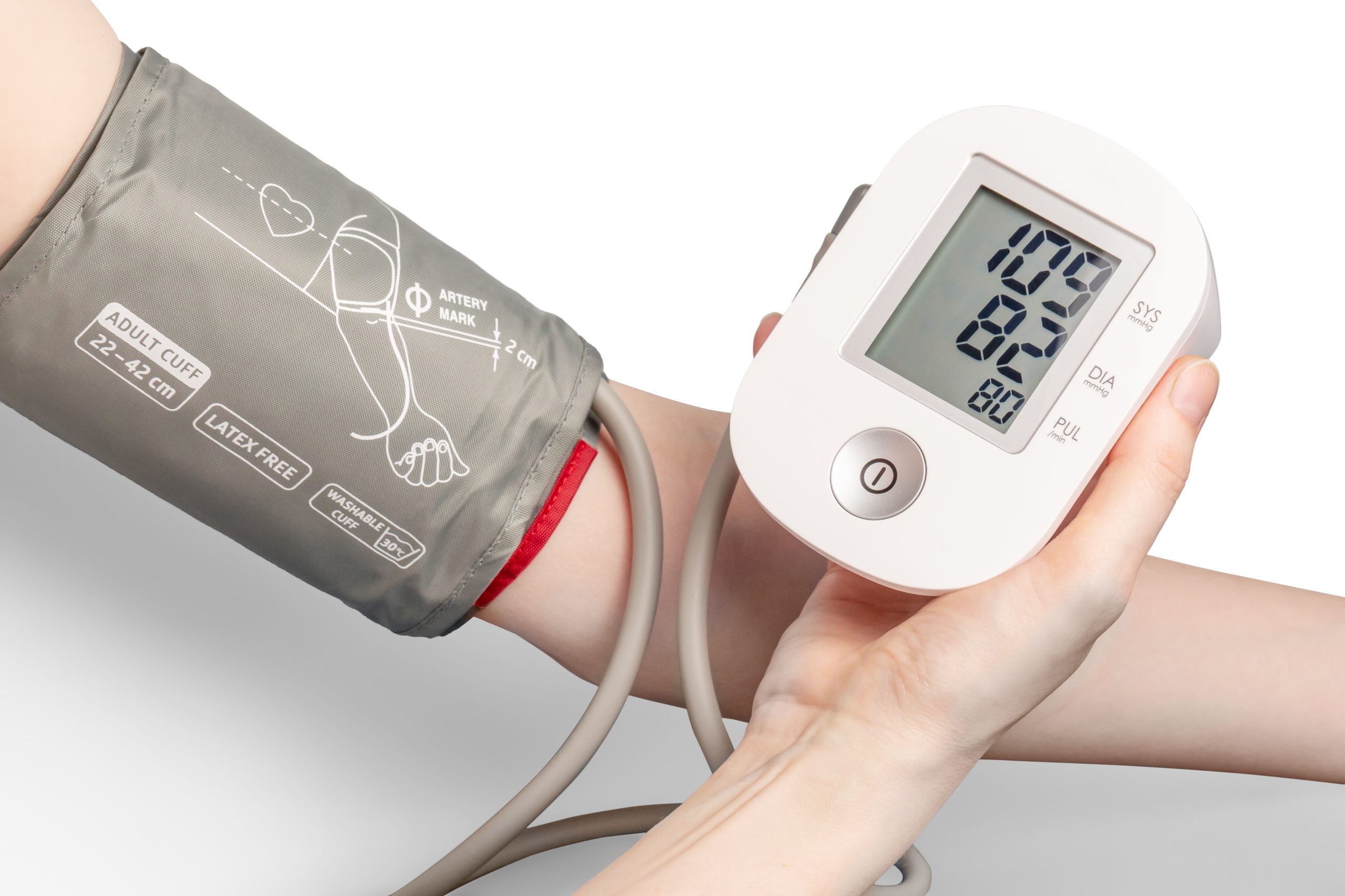
How to Live with High Blood Pressure
MILLIONS of people have high blood pressure and don’t know it. This is a serious situation for, as recent reports indicate, even moderately high blood pressure-hypertension-can, if unat- tended, sharply shorten life.
There is, however, a happy side to the picture: within the past ten years treatment for high blood pressure has been revolution- ized. And advances continue. Doctors now have effective drugs, and surgeons have been learning new techniques to achieve dramatic cures. Today most hypertensives can, with treatment, lead virtually normal lives.
Blood pressure is simply the push of blood against the walls of the arteries. Created by the heart’s pumping, the pressure is at its highest level-the systolic-each time the heart contracts, or beats. It falls to its lowest level–the diastolic-between beats. Blood- pressure readings usually include both measurements: the higher systolic over the lower diastolic. For example, 120/80.
In which age rise the Bp
It is normal for the blood pressure of any individual to vary, to rise temporarily during activity or excitement and to fall during sleep. Average blood pressure increases with age. For boys of fifteen to nineteen, the average is 118/72. It rises gradually to reach 132/80 at the age of sixty to sixty-four. For women of the same age groups the rise is from 114/70 to 134/82. Though women under forty have, on the average, lower blood pressure
HOW TO LIVE WITH HIGH BLOOD PRESSURE
than men under forty, women over fifty-five tend to have higher blood pressure than men of this age. The U.S. Society of Actuaries-experts who calculate insurance risks-made a monumental study covering nearly four million people. One important finding was the marked influence of ele- vated pressure on life expectancy-the higher the pressure the greater the effect. Elevations such as 160/100 increase the risk of premature death by as much as 200 per cent.
But even moderate elevations have a sharp effect. Men of thirty-five with blood pressure of 142/86, for example, have a death rate one and a half times the average for their age. Among those with pressure of 142/96 the mortality rate is two and a quarter times the average. Women have greater resistance, and their relative mortality from the same degrees of elevation is materially lower than that of men. Still, elevated pressure, if it is left unchecked, can be an important factor in shortening a woman’s life.
Another finding concerns the effect of overweight. When obesity and high blood pressure occur together, the increase in mortality is greater than can be accounted for by either condition by itself. Overweight seems to magnify the effect of a raised pressure.
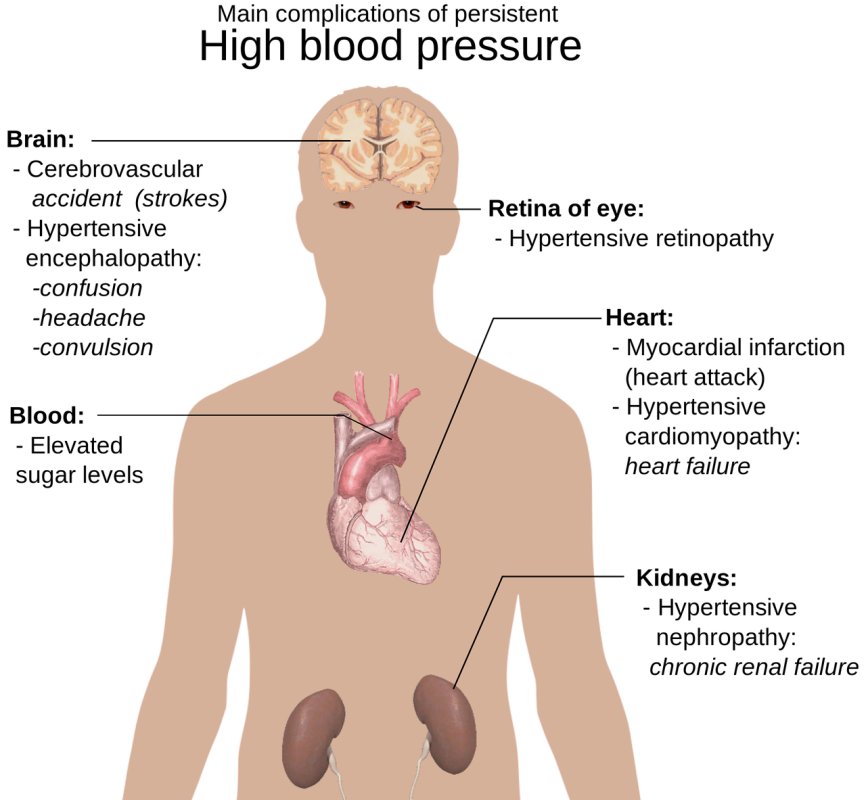
High blood pressure causes trouble by damaging the circulatory system. The heart, loaded with the extra burden of pumping blood at high pressure, will often grow larger and eventually fail from prolonged overwork.
Blood vessels may also be injured by the stress. When those in the retina of the eye are involved, vision may be lost. Kidney blood-vessel damage, by interfering with removal of body wastes, can ultimately produce uraemic poisoning. Injury to the blood vessels that feed the brain can cause cerebral hemorrhage and stroke. There is evidence that hypertension, by speeding up the process of atherosclerosis hardening and clogging of arteries- often leads to a heart attack, which strikes four to five times more hypertensive men than non-hypertensive ones. (In hypertensive women the incidence of heart attack is twenty times greater than in women with normal blood pressure.)
GIANTS OF THE BODY
Hypertension
Doctors report that even severe hypertension sometimes produces no symptoms at all. “If you have hypertension,” says a specialist, “your doctor will usually discover it during a routine medical check-up. Most likely you will feel perfectly well at the time.” Even when high blood pressure causes headaches, fatigue, dizziness, heart palpitations, insomnia, weakness, excessive blush- ing, these symptoms may not always be recognized for what they are. For all these complaints can be symptoms of many other disorders.
Doctors still have much to learn about the causes of high blood pressure. In a small percentage of cases there is specific organic trouble narrowing of one of the kidney blood vessels, for ex- ample, or a tumor of the adrenal glands above the kidneys. But in at least ninety out of a hundred cases no organic cause can be found; hypertension is then labeled “primary” or “essential.” Pregnancy and menopause, once indicted as significant factors, are exonerated by more recent research. And diet, though it may set off hypertension, is not considered a basic cause. Heredity, however, is clearly a factor.
“If either the mother or father has hypertension,” a noted specialist has remarked, “you can reasonably expect that at least one of any large family they produce will eventually become hypertensive; and if both parents have it, the majority of their children will be afflicted.”
Investigators believe hypertension to be closely linked with emotional disturbances.
In recent experiments, people with normal blood pressure were exposed to anger-producing situations. In those who bottled up their anger, blood pressure shot up; in those who freely expressed their anger, elevation was much less.
In some cases surgery can cure hypertension. A university hospital in Houston, Texas, recently operated on ninety-eight patients whose hypertension could be traced directly to diseased kidney arteries.
HOW TO LIVE WITH HIGH BLOOD PRESSURE
Causes of blood pressure
When the diseased artery sections were removed and synthetic150 grafts inserted, blood pressure in eighty-two of the patients went down to normal-and stayed there. The remaining sixteen showed great improvement.
Diet is important. Put some hypertensive people on a drastic low-salt diet, as little as one-tenth of a teaspoonful a day, and the blood pressure comes down and down-even down to normal. Give them salt again, and up goes the pressure. Only about a quarter of hypertensives, however, respond to diet so beautifully. One problem has been to persuade patients to maintain the salt restriction.
While it is not impossible to produce a tasty salt-free meal, many hypertensives say they would rather die than go on eating nothing but unsalted food for the rest of their lives. Now a remarkable compound has been found. Called chlorothiazide, it fastens on to sodium, the critical element in salt, pulls it right out of the blood-stream and allows the sodium to be eliminated readily. Hypertensives taking chlorothiazide or its derivatives can be a little freer with the salt cellar-enough to make many of them happy with their food again.
Scores of antihypertensive drugs will reduce pressure in various ways. Rauwolfia, or Indian snake-root, and its derivatives, such as reserpine, have a tranquilizer action on the brain. They reduce nervous tension and in the process often reduce high blood pressure.
Hydralazine and veratrum viride and its derivatives dilate blood vessels so that blood can get through more easily with less pressure. Nerve-blocking agents such as hexamethonium mecamyl- amine and guanethidine shut off excess nerve impulses and relax blood vessels.
Scientists are working with a remarkable new family of com- pounds which block the action of an enzyme, decarboxylase- suspected of playing an important role in hypertension. One of the new compounds-alpha methyldopa-has so far lowered blood pressure in 80 per cent of the hypertensive patients who have been given the drug at one clinic.
The outlook for control of severe hypertension is increasingly good—even for malignant hypertension, which has been the most
151
GIANTS OF THE BODY
serious form. “When I first started working on malignant hyper- tension more than thirty years ago,” reports another specialist, “it was 100 percent fatal and very quick. Now, if you get patients with malignant hypertension early, before the kidneys are com- pletely gone, and give them full treatment-get the pressure down and keep it down even at the cost of considerable discom- fort-I think we can say the patients can be kept in good shape even for ten or twenty years, not very far from normal life ex- pectancy.” (Many of the patients who develop malignant hyper- tension are well on in years.)
If you have been told by someone other than your family doctor -by a doctor examining you for an insurance company, say- that you have high blood pressure, consult your family doctor at once. If you are hypertensive, he will decide the right treatment for your individual case. He may start, perhaps, without any medicine at all, then work carefully to find the right drug or combination of drugs for you.
Fortunately, the medical profession’s once largely pessimistic attitude about hypertension has been replaced by an attitude of optimism. You have every reason to share it.
LAWRENCE GALTON