
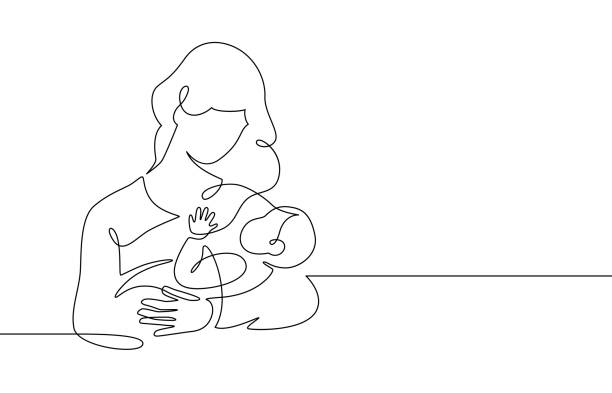
Nature’s Way in Birth
J. D. RAT CLIFF
Nature’s Way in Birth
AT each tick of the second hand of your watch a baby is born somewhere in the world an event so frequent that much of its wonder is lost. The woman who has born several children considers herself an authority on the subject. But the studious medical research man lacks this assurance. He wonders he admits there are great gaps in his knowledge. Indeed, he doesn’t even know why a baby is born when it is.
Why does the mother-body suddenly decide to rid itself of an infant it has sheltered for nine months .What causes the dramatic changes that take place in the bodies of mother and child at the moment of birth .What forces act to make the infant take its first gasping breath on which its life depends. The thoughtful obstetrician wishes he knew.
But while many of the basic facts about birth are still mysterious, a great fund of practical knowledge has accumulated. Impending birth is announced by an unmistakable sign a slight pain, caused by contractions of the uterus. These contractions are quite beyond the mother’s control, yet any woman intuitively recognises their significance. The first primitive woman needed no tutoring to assist her at childbirth, the process being as automatic as breathing.
The woman’s body has prepared for this moment in a number of remarkable ways. Her heart has enlarged slightly and her blood volume is up perhaps 25 per cent in order to care for the requirements of her baby. Under pressure of increased sex hormones, breasts have enlarged, developing an intricate network of milk ducts and an even more elaborate system of blood vessels to feed those ducts.
changes in mother body.
The mouth of the womb, instead of being hard and fibrous, is now soft and pliable. There is a good reason for this change. The cervix, or opening of the womb, is normally no larger than a drinking straw. It will have to be enlarged by five or six inches to permit passage of the baby. The birth canal itself has undergone remarkable alteration. Muscle fibres have elongated to become more elastic.
The shorter fibres normally present would never meet the stresses imposed at birth. There is a new system of blood vessels; and the tissues of the birth canal have begun to secrete a starchy substance called glycogen, which changes into glucose and then into lactic acid. Bacteria have a difficult time surviving in this highly acidic environment. Apparently this is nature’s way of warding off infection. Under the hormonal influence the ligaments holding the pelvic bones have begun to soften to allow of widening at the pelvic joints.

At the time of birth the uterus also undergoes change. At the first birth pain the stretched muscle fibres in the upper portion of the uterus begin to contract. The effect is to pull the lower uterus, which remains passive, over the baby’s head.
At the time of birth most infants about 96 per cent have assumed a head down position. Gravity may have played a part in placing them in this position, or the shape of the uterus. Only about 31 per cent are buttocks down. Since nature obviously intended a head down position, an obstetrician will attempt, by external pressures, to manoeuvre an abnormally placed baby into this position.
This is usually done about the eighth month of pregnancy. The kinds of contraction associated with delivery are varied. The first, usually mild, come at intervals of ten to thirty minutes and usually last about one minute. Gradually the tempo quickens. Towards the end they come at two to three minute intervals and

Aristotelian ism into a sentence, yet it can be done. He believed that man could master his world. Man endowed save with his five senses, unaided by priestly advice or by divine inspiration, could find out the composition of the earth, what it contained that was useful, how human and other animal bodies worked, what were the wellsprings of joy (in the Poetics), how he could enter into the vastness of the sea (in a submarine) or launch him- self into the airy firmament (in an aircraft), what his enemy Disease was and how it could be combated.
Such was the secret of that incredible activity of Aristotle’s studying now fishes and now politics, now ethics and now minerals. And man has justified Aristotle’s conviction man has conquered his world. Galen, who with Aristotle shared the throne of scholastic authority in the Middle Ages, belonged to a later century and a different era. Galen lived in Rome and he wrote in Greek.
His writings are so voluminous as to make the Holy Bible look like a pamphlet. He treated emperors, courtesans, wine merchants, generals, senators, vestal virgins, oriental rug dealers, philosophers and gladiators. He tells of all his patients, and of the little tricks he used to arrive at his diagnoses. Yet his knowledge of anatomy was learned entirely from dissections on animals. And for twelve hundred years the brilliance of his rhetoric prevented men from learning at first hand anything about the human body.
Finally the legions of light were drawn up and one other battle was fought in the name of the human body for human freedom. Its hero, even more ignored than Hippocrates, was the Flemish anatomist Vesalius, who first recorded completely and accurately the structure of the body. But not until 1543-when his De Humani Corporis Fabrica was printed. It is one of the great epoch- making books of the world.
In that long sleep of the intellect known as the Middle Ages, there was no space for the study of nature, and there was deter- mined opposition to human dissection both from the Church and the universities, from men ironically called Humanists. The influential scholars in the period of the revival of learning based their anatomy largely on the dictates of Galen, partly on Aristotle.
The anatomy of Galen and Aristotle was based upon the dissection of animals. And the scholastic squabbles of the late fifteenth and early sixteenth centuries were due, incredible as it may seem, to debating whether or not the human body corresponded to Galen’s description of it.
Against this massed tradition of ignorance and bigotry Vesalius launched himself with blunt vigor. The body was his bible, as he often said, and he cared not how he obtained copies. In Paris he found that he could steal bodies from Montfaucon, that spot which chatters in the pages of François Villon, where the bodies of criminals were hung upon the gibbets. In Louvain he sneaked by night to remove bodies from the gallows.
Under such difficult circumstances a knowledge of human anatomy was born into the world. Vesalius paid the penalty of his rashness. He was excommunicated to lift the ban he went upon a penitential journey and we hear of him no more.
But his work remains, Dr Human Coriolis Fabrics-“On the Fabric of the Human Body.” Across the title page of a copy of that book which he presented to a medical library, the great modern Canadian physician, Sir William Ostler, once wrote: “Modern medicine begins here.” It was a long time to wait for knowledge of the structure of the one object which is the most important and familiar to all of us. That knowledge is enshrined today in the minds and hearts of many men.
The Human Body’ is published by Alfred A. Knopf, Inc., New York