

Brain and memory, the human nervous system brain, spinal cord and nerves contains what is substantially a wet-cell electric battery, generating a direct current of about a tenth of a volt roughly one-twentieth as much as a torch battery. The electric charge is created by two body chemicals, sodium and potassium, operating on nerve tissues bathed in a fluid that is chiefly water. As each section of nerve fibre receives an electrical impulse, it triggers a reaction in the next section, so that impulses travel instantly to and from the marvellously intricate message centres of the brain.
How does Remarkable Memory display in brain?
To get a faint idea of what is going on continuously in the brain and the spinal cord, think of a thousand telephone switchboards, each big enough for a city like London, going full tilt receiving and transmitting requests, questions, orders. Through its incredible ability to hook together thousands of reverberating circuits in a fraction of a second each representing a memory or an idea the brain is able to bring together into one grand circuit the data needed to think and make decisions.
Many scientists believe that every experience of our lives is recorded and preserved by these electrical circuits, including millions that we seem to have completely forgotten. Psychiatrists have found that when a patient tries day after day he can recall buried incidents of his childhood, even though he invariably begins by saying, “I don’t remember a thing.”
How the brain stores its memories is still not fully known. Some scientists believe that each item of memory is contained in a loop of cells connected by tiny tendrils, with an electrical current going round and round the loop, which might be hundreds or thousands of cells in length. Other theories suggest that the memory is somehow impressed, or “etched” on the cell, or exists on a chain of cells like knots in a string.
We do know that for the first thirty to sixty minutes after being received, any sensory impression is “floating about,” so to speak, in the brain, not yet firmly registered. This may be why, after a sharp blow on the head, people often permanently forget what happened to them during the previous fifteen or twenty minutes.
Be that as it may, the number of items that can be remembered is far greater than the total number of brain cells. A neurophysiologist has estimated that after seventy years of activity the brain may contain as many as fifteen billion separate bits of information. Thus your memory is a treasure house whose size and strength are almost beyond human comprehension. It is a pity that so many of us store up so much less learning and experience than is possible.
Since our senses report, automatically and continuously, every- thing that we see, touch, hear, smell or taste, the avalanche of impressions would be overwhelming if there were no ways to screen them out. Fortunately at many points in the nervous system there are tiny gaps, called synapses, which prevent millions of minor signals, such as a one degree change in temperature, from getting through. The electrical impression from any one nerve is not strong enough to jump across one of these breaks, but the impression from a large bundle of fibers transmitting simultaneously can do so.
A good example of this protective mechanism is the retina of the eye, which has about 100,000,000 light sensitive cells capable of transmitting an impression. But there are only about 1,000,000 nerve fibers leading back into the brain. Thus, before it can reach the brain, an impression has to be strong enough to command the response of at least 100 cells.
How does Remarkable Memory display in brain?
There are three main message centers in the brain. Each part receives and acts upon messages appropriate to its special functions. The medulla oblongata (see illustration) takes care of automatic functions like breathing and the pumping of the heart. The cerebrum with its covering of grey matter in turn is the seat of consciousness, memory, reason in short, the human personality. The cerebellum controls the voluntary action of the muscles, partly on orders from the cerebrum.
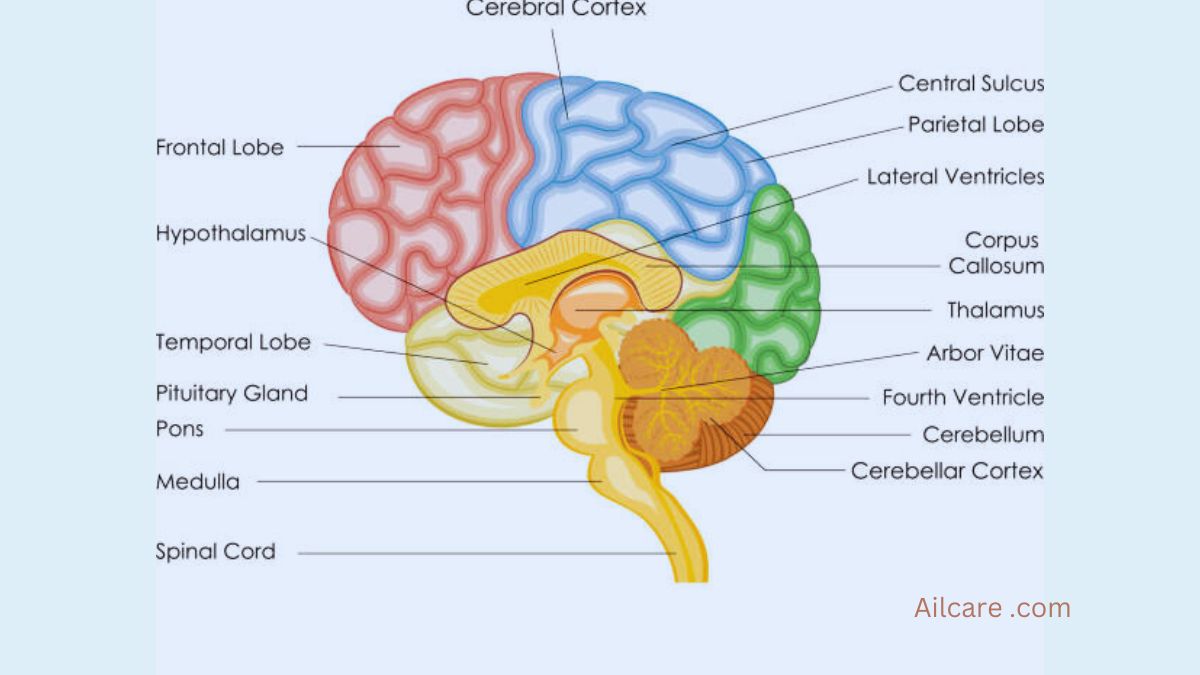
How does Remarkable Memory display in brain
A reflex action, like with drawing your foot when it is tickled, might be handled by the spinal cord alone .The size of the brain area used by each part of the body is governed by the amount of conscious control the member requires the more control, the larger the brain area.
the hands and fingers, which can perform highly complicated manoeuvres, require a brain area much larger than that set aside for the legs. (The tongue and lips also require a proportionately big brain area.) How are light, sound, temperature and the other aspects of the external world translated into seeing, hearing, feeling? All we know is that certain physical conditions cause our sense organs to transmit electrical messages to the appropriate receiving area in the brain, and that the quality of the sensation is determined by the pattern of impulses received.
How does Remarkable Memory display in brain?
While the brain is exposed during an operation, a small electrical charge applied to the nervous tissues where sight and hearing are recorded can make a patient see flashes of light or hear buzzing, ringing or knocking. Stimulation to the speech canter will cause the individual to cry out like a baby but not to indulge in articulate speech, which is too complicated for such stimulation. When these experiments are performed on individuals who are conscious (brain tissue is not sensitive to pain) they report that they do not feel as though some external force were causing the baby like cries to be uttered. On the contrary, they feel a strong but inward compulsion to cry out.
In many cases messages go simultaneously to more than one of the four main parts of the nervous system. Sometimes these canters are required to cooperate, sometimes not. You huddle deeper under a blanket on a cold night on orders from the cerebellum, but the message might also go up as high as the cerebrum and cause you to dream of the Arctic. But these are “low-priority” messages. An important signal, such as the smell of smoke in the night, alerts all the message canters, sets the electrical circuits flashing at a furious rate and leads to conscious action.
Many actions that require a great deal of conscious attention the first time they are performed can afterwards be shunted down into a part of the brain functioning at a lower, less conscious level. Riding a bicycle, swimming and other skills which initially demand thought (celebration) in time become automatic or reflex actions. We also learn to discard from consciousness unwanted messages that are many times repeated. Thus a city dweller sleeps through the sound of traffic but is awakened in the country by the crowing of a distant rooster.
What causes mental disturbance? In both retarded mentality and certain types of insanity there is damage either to the brain cells themselves or to their electrical processes. Excessive anxiety, ungovernable rage and other unreasonable states of mind evidently result from electrical circuits that get out of control. Some mental illnesses seem associated with the in ability to bring together a sufficiently large number of the reverberating electrical circuits of the brain.
The deluded individual who thinks he is Napoleon is able to use the circuits that contain the name of Napoleon and the fact that he was a general. But he is unable to connect with these circuits the ones that should tell him that Napoleon was somebody else who died many years ago.
How does Remarkable Memory display in brain?
What constitutes genius? Presumably the highly gifted person has some inborn capacity to coordinate his electrical circuits unusually well. The more we learn, the greater the store of memories on which we will be able to draw. The more we exercise the function of combining hundreds of circuits into larger ones, the easier it becomes and the more extensive these circuits will grow to be.
The late Sir Charles Sherrington, the great authority on the brain, after pointing out that man’s brain is, in proportion to his weight, far larger than that of any of the animals, suggests that its evolution is still continuing: “Nor is the brain’s present state, we may suppose, more than an interim phase, on the way to something else, something better, we may hope.”
How Medicine Is the Mother Of Science