
Introduction
The human eye is an extraordinary biological marvel. Millions of individual cells execute a complex, highly coordinated process during development to form a precise visual system. Each eyeball functions like a miniature, self-adjusting camera that automatically focuses based on distance, turns smoothly in any direction, and instinctively closes its eyelids when threat or danger appears.
To begin with, understanding the intricate structure of the eye makes it easier to recognize the early indications of eye problems before significant vision impairment occurs.
How the Human Eye Functions Like a Camera
The eye operates through a sophisticated combination of natural lenses, diaphragms, and light-sensitive screens that work together seamlessly.
-
The Natural Biconvex Lens: Created from specialized transparent cells, the lens is suspended with precise centering across the light path entering the eye.
-
The Self-Adjusting Pupil: Functioning like a camera’s iris diaphragm, the pupil adjusts its size automatically to control how much light enters the eye depending on environmental brightness.
-
Dynamic Curvature: Additionally, unlike a static glass lens, the natural lens changes its curvature dynamically to focus on both near objects (such as reading material) and distant objects.
-

Indications of Eye Problems Moisturizing Window (Cornea): The front chamber is protected by a transparent outer layer kept continuously clean and moist by eyelid blinks that sweep tear fluid over the window.
[Incoming Light] ➔ [Pupil Adjustment] ➔ [Lens Focusing] ➔ [Retinal Electrical Signals] ➔ [Brain Interpretation]
Recognizing the Early Indications of Eye Problems
Because the eye relies on balanced fluid pressure, optical clarity, and nerve signaling, minor disruptions can indicate underlying issues. Consequently, paying attention to early symptoms can prevent long-term damage.
Key Symptoms and Warning Signs:
-
Persistent Blurry or Double Vision: First, if the natural lens or cornea loses its precise curvature or transparency, objects may appear distorted or double.
-
Eye Strain and Frequent Headaches: Furthermore, when the internal muscles struggle continuously to adjust focus or balance light, chronic strain often develops.
-
Changes in Pressure or Dryness: In addition, disruptions in the fluid pressure within the front chamber can cause discomfort, dryness, or a feeling of heaviness around the eyeball.
-
Poor Night Vision or Glare: Finally, difficulty seeing in low light or experiencing extreme halos around light sources can indicate lens opacity or pupil regulation issues.
The Retina: The Brain’s Visual Screen
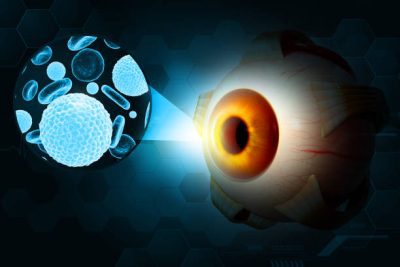
The key light-sensitive structure at the back of the eye is the retina. Composed of a complex, ninefold cellular layer, the retina is essentially an extension of the brain itself located inside the eyeball.
-
Massive Cell Count: The human retina contains approximately 137,000,000 separate light-sensitive visual elements.
-
Condensed Neural Pathways: However, signals from these millions of cells condense into roughly 1,000,000 nerve fibers that lead directly to the brain.
-
Continuous Processing: The retinal screen records a constantly changing, lifelong moving picture that requires no manual adjustments throughout every waking day.
How the Mind Interprets What the Eye Sees
Surprisingly, the eye itself does not “see” in the complete sense—it merely records two-dimensional patterns of light, brightness, and shadow. The electrical signals transmitted along nerve pathways are processed by the brain to create full visual perception.
[Two-Dimensional Light Image] ➔ [Electrical Signal Storm in Brain] ➔ [Mind Adds Depth & Color] ➔ [Perceived 3D Vision]
The Mind’s Role in Visual Experience:
-
Adding the Third Dimension: The retina captures flat, 2D images. For example, it is the mind that interprets depth, distance, and perspective to create 3D sight.
-
Color and Spatial Awareness: Electrical charges in themselves contain no color or shape; nevertheless, the brain interprets these pulses into vivid colors, contours, and brightness.
-
Indications of Eye Problems The Influence of Experience: As demonstrated by the famous Ames Optical Illusions (such as the distorted Ames Room), the mind heavily relies on past experiences and expectations to make sense of incoming visual data.
Conclusion
The human visual system—from the delicate balance of the lens to the brain’s complex processing—is a testament to biological precision. Therefore, remaining attentive to early indications of eye problems and scheduling routine eye examinations ensures that this incredible visual system stays healthy throughout life.