

What is Automation In the Body
Automation runs factories and makes headlines as something new these days. But far more striking examples of automatic control are to be found in the human body. Whether we are asleep or awake, a great buzz of activity is always going on. Occasionally the results of this automated activity are displayed for the world to see. To her embarrassment, a scarlet blush voluntarily suffuses the face of a young girl. A man finds himself yawning in the middle of his boss’s best story. A child bursts into uncontrollable laughter as a forefinger approaches his ribs.
These things are merely expressions of the whirlwind of involuntary- reflex-activity which our bodies carry on all the time. Most of this activity is designed to help the human mechanism in its effort to maintain equilibrium, to survive. When we are angered or frightened, our nervous system does not wait to evaluate the cause; instead, it prepares the body im- mediately to face a major disaster.
Heart action and respiration are speeded up. Sugar for quick energy is released from the liver into the blood-stream. Adrenalin is liberated to tighten blood vessels and increase blood pressure. Thus, our body is prepared for fight or flight-although reason tells us that neither may be necessary. In a sense, the hypothalamus that lies at the base of the brain is the body’s silent metronome. It times sleep cycles, the action of the heart, breathing, digestion and other vital processes.
If our body temperature drops, it prompts us to shiver-an exercise which warms us. Many of our extraordinary reflexes serve a protective function. A finger touches a hot stove. Scores of heat receptors in the skin sound the alarm. Messages flash along nerve pathways. But valuable time would be lost if they had to travel all the way to the brain. Hence the spinal cord itself takes over. It orders instant muscular contraction, and the finger is automatically pulled away.
(The familiar knee-jerk reflex which a doctor pro- duces by tapping with a rubber hammer is merely a test to check the alertness and health of nerve pathways.) The activity of the salivary glands-which secrete more than a quart of fluid a day—is one of our most thoroughly studied re- Hexes. These little glands react if the body’s water reserves drop too low and produce the sensation of thirst. Saliva’s main job is to moisten and lubricate food, a preliminary step in digestion.
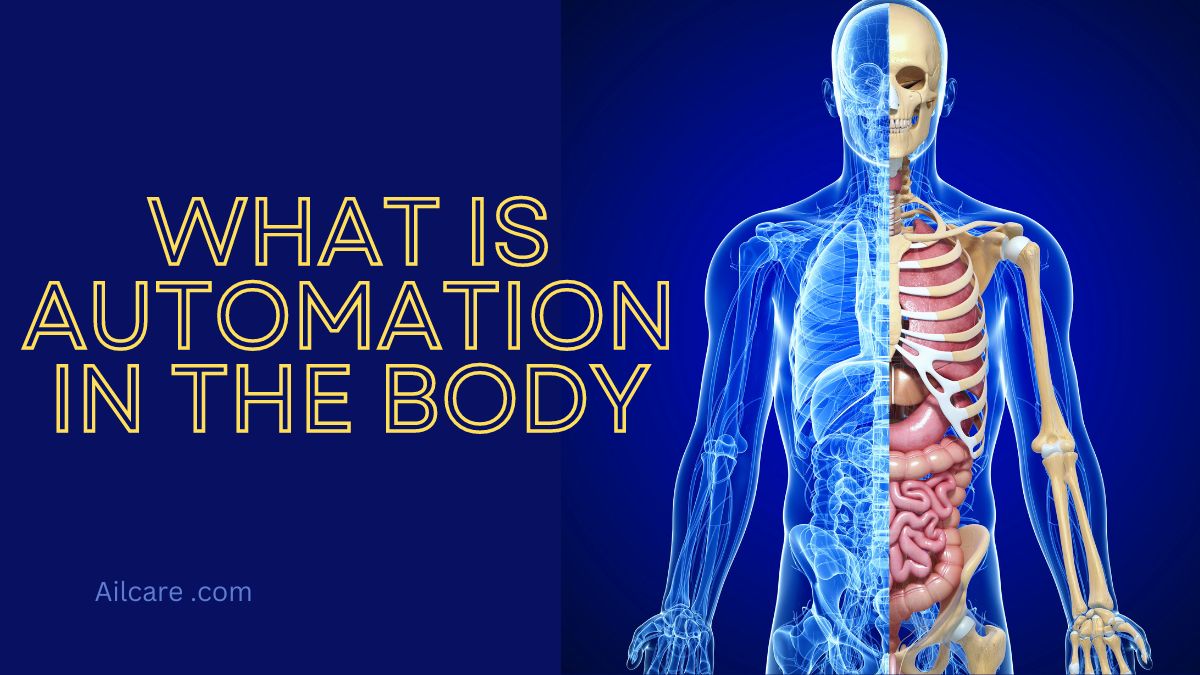
What is Automation In the Body?
The smell, or even the thought, of a steak grilling sets mouths watering. Fear or worry, on the other hand, can dry up secretions-hence the flask of water on the table for the nervous lecturer. One of the first crude lie detectors was based on observations about the flow of saliva. In the Middle Ages judges ordered mouths of suspected felons to be stuffed with flour, on the theory that if a man was innocent, his saliva would moisten the flour so that it could be swallowed. The guilty would remain dry-mouthed and miserable.
Eyes have a number of protective reflexes. Pupils contract in bright sunlight, to shut out excessive light that might be damaging. We blink continually: our kids act as windscreen wipers to keep the eyes clean and to lubricate them with tears. One of the most horrible of medieval tortures was that practiced by the Turks: the removal of tear glands. A period of dry-eyed misery preceded blindness.
Coughing is another reflex. Its job: to sweep the throat clean. We may complain of the annoyance of coughing, but we would face a serious problem if we didn’t cough. Indeed, it is so important that it creates a problem in surgery. Anaesthesia dampens or destroys the cough reflex, so that driblets of bacteria and other injurious material tend to be drawn downward into the windpipe. The anaesthetist guards against this by cleaning the throat frequently with a suction device.
When the cough reflex moves into action, air is sucked into the lungs and trapped by the epiglottis, the little flap valve which keeps food from going down the windpipe. At the same time the soft palate rises to close off nasal passages. With everything in readiness, the chest muscles tighten. The epiglottis then flaps open, and a minor hurricane rushes from the throat, sweeping irritants before it. Sneezing is another familiar reflex. Like coughing, it is a house- cleaning operation. An irritant gets into a nasal passage.
The brain sends out orders to get rid of it. A series of events, much like the sequence in coughing, gets under way; inspiration of air, sudden tightening of chest and abdominal muscles. As the explosion is about to take place, the brain sends further orders: shut the eyes, open the soft palate wide. In coughing, the soft palate closes to block nasal passages; in sneezing it is wide open-so that air rushes out through the mouth and nose. A baby sneezes frequently; that is his way of blowing his nose.
An interesting fact about sneezing is that minor irritants cause it, but painful injury (such as surgery) does not. Yawning is at times one of the most soul-satisfying, at times one of the most embarrassing, of reflexes. A widely accepted explanation of yawning is that it traces to brain anaemia. When we are sleepy, circulation in the brain becomes sluggish and the oxygen supply is diminished. If we are to stay awake, oxygen must be in- creased. The yawn—and the chestful of air that goes with it—is the answer.
Tickle results from slight irritation of nerve endings in the skin. Mysteriously enough, the reaction appears to depend on brain interpretation of the irritation. A man can dust his own foot with a feather, or prod his ribs with a finger, with no result. But let another person do the same thing and there is an explosive burst of laughter. When we are stricken with terror, reflexes announce the fact. Blood vessels in the face tighten, and we become white-faced.
The same facial arteries can be affected when we hear an indelicate remark or are confronted by an embarrassing situation but on these occasions they relax, and we blush. Why the reddened blush is restricted to the face and neck, and does not suffuse the entire body, no one knows. The tendency to blush diminishes or disappears with age. Don’t be embarrassed by your blushes, sneezes, yawns, shivers and other reflexes. They are merely signs that your body is looking after its own welfare-taking care of problems as they arise and not bothering you with the details.
What is Automation In the Body What is Automation In the Body What is Automation In the Body What is Automation In the Body What is Automation In the Body What is Automation In the Body What is Automation In the Body What is Automation In the Body What is Automation In the Body What is Automation In the Body What is Automation In the Body