
MARGARET SHEA GILBERT
Changes of the unborn
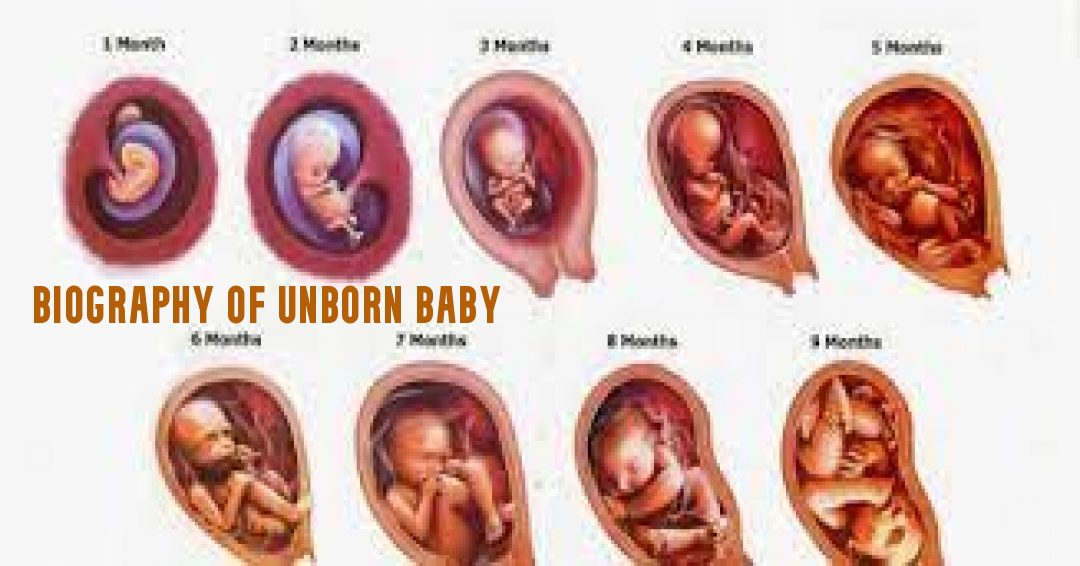
Changes of the unborn means out of the unknown into the image of Man, this is the miraculous change which occurs during the first month of human life. Life begins for each of us at an unfeeling, unknown, and honoured instant when a minute, wriggling sperm plunges headlong into a Mature ovum or egg. The quiet ovum, electrified by the entrance of this stranger creature, reacts with the violent agitation, releasing the Life forming potentiates that are inherent in the human egg. It is at this moment of fusion of the sperm and ovum (a process called fertilisation) that there arises a new individual who contains the potentialities for unnumbered generations of men.
At this moment of fertilisation there has been determined not only the existence of a new human being, but also its sex and individuality. By the union of sperm and ovum, he has inherited a mixture of the physical traits of both parents, as well as those hereditary traits which he in turn will transmit to his offspring.
First Month: New Life
Out of the unknown into the image of Man—this is the miraculous change which occurs during the first month of human life. We grow from an egg so small as to be barely visible, to a young human embryo almost one fourth of an inch long, increasing my times in size and nearly ten thousand times in weight. This growth occurs by cell division or “cleavage”—the fertilised ovum divides into two cells, which then divide into four and so on until the millions of cells of the human body have been formed.
In the first month this cell division causes us to change from small round egg cell into a creature with a head, a body and it must be admitted, a tail; with a heart that beats and blood the circulates; with the beginnings of arms and legs, eyes and ears, stomach and brain.In fact, within the first thirty days of our life almost every organ that serves us during our allotted time (as well as some organs that disappear before birth) has started to form.
In addition to this astounding growth and development we must also make our first struggle for food. For this purpose a special “feeding layer” —the claustrophobia-forms on the outer edge of the little ball of cells, and “eats its way into the tissues of the uterus. As these tissues are digested, the uterus forms a protective wall—the placenta—which co-operates in feeding the growing embryo.
The maternal blood carries food, oxygen (the essential component of the air we breathe) and water to the placenta, where they are absorbed by the claustrophobia and passed on to the embryo through the blood vessels in the umbilical cord. In return, the waste products of the embryo are brought to the placenta and transferred to the mother’s blood, which carries them to her kidneys and lungs to be thrown out. In no case does the mother’s blood actually circulate through the embryo-a prevalent but quite unfounded belief.
Meanwhile the new individual has been moving slowly along the path of changes which it is hoped will make a man of him. While the claustrophobia has been creating a nest for the egg in the uterine wall, the inner cell mass has changed from a solid ball of cells into a small hollow organ resembling a figure eight—that is, it contains two cavities separated in the middle by a double layered plate called the embryonic disc which, alone, develops into a human being. The lower half of our hypothetical figure eight becomes a small empty vesicle, called the yolk sac, which eventually in the second month) is severed from the embryo. The upper half forms a water sac (called the amnion) completely surrounding the embryo except at the thick umbilical cord. The embryo.Then floats in a water-jacket which acts as a shock absorbed, dreading any jolts or blows which may strike the mother’s body.
Having now made sure of its safety, the truly embryonic part of the egg—the double-layered plate–can enter wholeheartedly into the business of becoming a human being. Oddly enough, it is his heart and his brain, in their simplest forms, which develop first.
Almost at once (by the age of seventeen days at most) the first special cells whose exact future we can predict appear. They are young blood cells, occurring in groups called “blood islands” which soon fuse to form a single tube, the heart tube, in the region that is to be the head end of the embryonic disc. This simple tube must undergo many changes before it becomes the typical human heart, but rather than wait for that distant day before starting work, it begins pulsating at once. For a slight twitch runs through the tube, then another, and soon the heart is rhythmically contracting and expanding, forcing the blood to circulate through the blood vessels in the embryonic disc. It must continue to beat until the end of life.
About the same time the nervous system also develops. In the embryonic disc a thickened oval plate forms, called the neural plate, the edges of which rise as ridges from the flat surface and roll together into a round tube exactly in the middle of what will be the embryo’s back. The front end of this tube will later develop into the brain; the back part will become the spinal cord. Thus, in this fourth week of life, this simple tube represents the beginning of the nervous system–the dawn of the brain, man’s most precious possession.
The embryo now turns his attention to the food canal. The hungry man calls this structure his stomach, but the embryologist briefly and indelicately speaks of the gut. The flat embryonic disc becomes humped up in the middle into a long ridge-like pocket Which has a blind recess at either end. Very shortly an opening breaks through from the foregut upon the under surface of the suture head to form the primitive mouth, though a similar outlet at the hind end remains closed for some time.
embryo is a small creature about one-tenth of an inch long with head and tail ends, a back and a belly. He has no arms or legs, and he lacks a face or neck, so his heart lies close against his brain. Within this unhuman exterior, however, he had also started to form his lungs, which first appear Within twenty-five days after the simple egg was fertilized by the sperm, the as a shallow groove in the floor of the foregut; his liver is forming as a thicken. ing in the wall of the foregut just behind the heart; and he has entered on a long and devious path which will ultimately lead to the formation of his kidneys.
The development of the human kidneys presents a striking example of a phenomenon which might be called an “evolutionary hangover.” Instead of forming at once the type of organ which he as a human will use, the embryo forms a type which a much simpler animal (say the fish) possesses. Then he scraps this “fish organ” and forms another which a higher animal such as the frog uses. Again the embryo scraps the organ and then, perhaps out of the fragments of these preceding structures, forms his own human organ. It is as if, every time a modern locomotive was built, the builder first made the oldest, simplest locomotive evermade,took this engine apart, and out of the old and some new built a later locomotive; and after several such trials finally a modern locomotive, perhaps using some metal which had gone into the first. Scientists interpret this strange process com-mon to the development of all higher animals as a hasty, sketchy repetition of the long process of evolution.
By the end of the month the embryo is about a quarter of an inch long, curled almost in a circle, with a short pointed tail below his belly, and small “buds” on the sides of his body-incipient arms and legs. On the sides of his short neck appear four clefts, comparable to the gill-slits of a fish-another “evolutionary hangover.” Almost all the organs of the human body have begun to form. In the head the eyes have arisen as two small pouches thrust out from the young brain tube. The skin over the front of the head shows two sunken patches of thickened tissue which are the beginning of a nose. At a short distance behind each eye an ear has started to develop-not the external ear, but the sensitive tissue which will later enable the individual to hear. In thirty days the new human being has traveled the path from the mysteriously simple egg and sperm to the threshold of humanity.
HOW LIFE BEGINS
Second Month: The Face of man
From tadpole to man: so one might characterize the chances ar occur during the second month of life. True, the embryo is no tadpole, but it looks not unlike one. The tailed bulbous creature with its enormous drooping head, fish-like gill-slits, and formless stubs for arms and legs bears little resemblance to a human form By the end of the second month, however, the embryo has a recognizable human character, although it is during this period that the human tail reaches its greatest development. In this month the embryo increases sixfold in length (to almost an inch and a half) and approximately five hundred times in weight. Bones and muscles, developing between the skin and the internal organs, round out the contours of the body.
But the developing face and neck are the main features that give a human appearance, however grotesque. The mouth, now bounded by upper and lower jaws, is gradually reduced in size as the fused material forms cheeks. The nasal sacs gradually move closer together until they form a broad nose. The eyes, which at first lie on the sides of the head, are shifted round to the front. During the last week of the month eyelids develop, which shortly afterwards close down.
The forehead is prominent and bulging, giving the embryo a very brainy appearance. In fact, the embryo is truly brainy in the sense that the brain forms by far the largest part of the head. It will take the face many years to overcome this early dominance of the brain and to reach the relative size the face has in the adult.
The limbs similarly pass through a series of changes. The limb buds elongate, and the free end of the limb becomes flattened into a paddle-like ridge which forms the finger-plate or toe-plate. Soon five parallel ridges separated by shallow grooves appear within each plate; the grooves are gradually cut through, thus setting off five distinct fingers and toes. Transverse constrictions within each limb mark off elbow and wrist, knee and ankle.
The human tail reaches its greatest development during the fifteen
BIOGRAPHY OF THE UNBORN
fifth week, and the muscles which move the tail in lower animals are present. But from this time it regresses, and only in abnormal s is it present in the newborn infant. The bones develop at the same time as the muscles. In most instances of bone development a pattern of the bone is first formed in cartilage, a softer translucent material, and later a hard bony substance is laid down in and round the cartilage model. As a sculptor first fashions his work in clay and then, when he knows that his design is adequate, casts the statue in bronze, so the developing embryo seems to plan out its skeleton in cartilage and then cast it in bone. This process continues through every month of life before birth, and throughout childhood and adolescence. Not until maturity is the skeleton finally cast.
Perhaps the most interesting feature of the second month of life is the development of the sexual organs. At the beginning of the month there is no way of telling the sex of the embryo except by identifying the sex chromosomes. By the end of the month the sex is clearly evident in the internal sex organs and is usually in- dicated externally. The most surprising aspect of sexual develop- ment is that the first-formed organs are identical in the two sexes. Even milk glands start to develop in both sexes near the end of the second month. Nature seems to lay down in each individual all the sexual organs of the race, then by emphasizing certain of these organs and allowing the remainder to degenerate, trans- forms the indifferent embryo into male or female.
So the second month of life closes with the stamp of human likeness clearly imprinted on the embryo. During the remaining seven months the young human being is called a foetus, and the chief changes will be growth and detailed development.
Third Month: Emergence of Sex
Now the future “lords of all they survey” assert their ascendancy over the timid female, for the male child during the third month plunges into the business of sexual development, while the female
HOW LIFE BEGINS
Idallies nearer the neutral ground of sexual indifference. Or if sexual differences are overlooked, the third month could be marked the “tooth month,” for early in this period buds for all twenty of the temporary teeth of childhood are laid down, and the sockets for these teeth arise in the hardening jaw-bones.
Although six months must pass before the first cry of the infant will be heard, the vocal cords whose vibrations produce such cries now appear, at present as ineffective as a broken violin string. Only during the first six months after birth do they take on the form of effective human vocal cords.
It must be remembered that during the period of life within the uterus no air passes through the larynx into the lungs. The fetus lives in a watery world where breathing would merely flood the lungs with amniotic fluid, and the vocal cords remain thick, soft and lax.
The digestive system of the three-month-old fetus begins to show signs of activity. The cells lining the stomach have started to secrete mucus-the fluid which acts as a lubricant in the pas- sage of food through the digestive organs. The liver starts pouring bile into the intestine. The kidneys likewise start functioning, secreting urine, which gradually seeps out of the foetal bladder into the amniotic fluid, although most of the waste products of the foetus are still passed through the placenta into the mother’s blood.
Overlaying the internal organs are the bones and muscles which, with their steady development, determine the form, contours and strength of the foetal body. In the face, the developing jaw-bones, the cheek-bones and even the nasal bones that form the bridge of the nose begin to give human contours and modelling to the small, wizened fetal face. Centers of bone formation have appeared in the cartilages of the hands and feet, but the wrists and ankles are still supported only by cartilage.
No longer is there any question about whether or not the foetus is a living, individual member of mankind. Not only have several of the internal organs taken on their permanent functions, but the well-developed muscles now produce spontaneous movements of the arms, legs and shoulders, and even of the fingers.
BIOGRAPHY OF THE UNBORN
Fourth Month: The Quickening
Death throws its shadow over man before he is born, for the stream of life flows most swiftly through the embryo and young foetus and then inexorably slows down, even within the uterus. The period of greatest growth occurs during the third and fourth foetal months, when the foetus grows approximately six to eight inches in length, reaching almost one-half its height at birth. Thereafter the rate of growth decreases steadily.
However, the young foetus is not a miniature man, but a gnome- like creature whose head is too large, trunk too broad and legs too short. At two months the head forms almost one-half of the body; from the third to fifth months it is one-third, at birth a quarter, and in the adult about one-tenth the body height.
Nevertheless, the four-month foetus is not an unhandsome crea- ture. With his head held more or less erect, and his back reason- ably straight, he bears a real resemblance to a normal infant. The face is wide but well modelled, with widely spaced eyes. The hands and feet are well formed. The fingers and toes are rather broad, and are usually flexed. At the tip of each finger and toe patterned whorls of skin ridges appear the basis of future finger- prints and toe-prints.
As might be expected, the pattern of these skin ridges is characteristically different for each foetus; at four months each human being is marked for life with an individual, unchangeable stamp of identity.
The skin of the body is, in general, dark red and quite wrinkled at this time; the redness indicates that the skin is so thin that the blood coursing through the underlying vessels determines its colour. Very little fat is stored in the foetus’s body before the sixth month, and the skin remains loose and wrinkled until underlain by fat.
Now the still, silent march of the foetus along the road from con- ception to birth becomes enlivened and quickened. The foetus stirs, stretches, and vigorously thrusts out arms and legs. The first movements to be perceived by the mother may seem to her like
HOW LIFE BEGINS
the fluttering of wings, but before long his blows against the uterine wall inform her in unmistakable terms that life is beating at the door of the womb. For this is the time of the “quickening
in the womb” of folklore.
Fifth Month: Hair, Nails and Skin
Now that the internal organs are well laid down, the skin and the structures derived from it hasten to attain their final form. The surface of the skin becomes covered with tough dried and dead cells which form a protective barrier between the environment and the soft tissues of the body. Even as in life after birth, the outer dead cells are being constantly sloughed off and replaced from below by the continually growing skin. Sweat glands are formed, also sebaceous glands which secrete oil at the base of each hair, and which, during the fifth month, pour out a fatty secretion which, becoming mixed with the dead cells sloughed off from the skin, forms a cheesy paste covering the entire body. This material, called the vernix caseosa, is thought to serve the fetus as a protective cloak from the surrounding amniotic fluid, which by this time contains waste products which might erode the still tender skin.
Derivatives of the skin likewise undergo marked development. Fine hair is generally present all over the scalp at this time. Nails appear on the fingers and toes. In the developing tooth germs the “milk teeth,” the pearly enamel cap and the underlying bone- like dentine are formed.
But the most striking feature of the month’s development is the straightening of the body axis. Early in the second month the embryo forms almost a closed circle, with its tail not far from its head. At three months the head has been raised considerably and the back forms a shallow curve. At five months the head is correctly balanced on the newly formed neck, and the back is still less curved. At birth the head is perfectly erect and the back is almost unbelievably straight. In fact, it is more nearly straight than it
BIOGRAPHY OF THE UNBORN
will ever be again, for as soon as the child learns to sit and walk, secondary curvatures appear in the spinal column as aids in bodybalance.
The five-month foetus is a lean creature with wrinkled skin, about a foot long and weighing about one pound. If born (or, strictly speaking, aborted) it may live for a few minutes, take a few breaths and perhaps cry. But it soon gives up the struggle and dies. Although able to move its arms and legs actively, it seems to be unable to maintain the complex movements necessary for continued breathing.
Sixth Month: Eyes That Open on Darkness
Now the expectant parents of the six-month-old human fetus may become overwhelmingly curious about the sex of their off- spring, especially when they realize that the sex is readily perceived in the fetus. Yet to the external world no sign is given.
During the sixth month the eyelids, fused shut since the third month, reopen. Completely formed eyes are disclosed, which during the seventh month become responsive to light. Eyelashes and eyebrows usually develop in the sixth or seventh month. In the mouth, taste buds are present all over the surface of the ton- gue, and on the roof and walls of the mouth and throat, being relatively more numerous than in the infant or adult. It seems odd that the fetus, with no occasion for tasting, should be the more plentifully equipped, and some biologists believe that this phenomenon is but another evidence of the recurrence of evolutionary stages in development, since in many lower animals taste organs are more widely and generously distributed than they are in man. The six-month fetus, if born, will breathe, cry, squirm and per- haps live for several hours, but the chances of such a premature child surviving are extremely slight unless it is protected in an incubator. The vitality, the strength to live, is a very weak flame, easily snuffed out by the first adverse contact with the external
world.
HOW LIFE BEGINS
Seventh Month: The Dormant Brain
Now the waiting foetus crosses the unknown ground lying be- tween dependence and independence. For although he normally spends two more months within the uterus, he is none the less capable of independent life. If circumstances require it and the conditions of birth are favourable, the seven-month foetus is frequently able to survive premature birth.
One of the prime causes of the failure of younger foetuses to survive birth is believed to be the inadequate development of the nervous system, especially of those parts concerned in maintain- ing constant rhythmic breathing movements, in carrying out the sequence of muscular contractions involved in swallowing, and in controlling the intricate mechanism for maintaining body temperature.
The human nervous system consists of a complex network of nerves connecting all the organs of the body with the brain and spinal cord, the centralized “clearing-house” for all the nervous impulses brought in from the sense organs and sent out to the muscles. By the third month of life special regions and structures have developed within the brain: the cerebellum, an expanded part of the brain that receives fibres coming mostly from the ear; and two large sac-like outpocketings, the cerebral hemispheres, the most distinctive feature of man’s brain. They are destined to become the most complex and elaborately developed structures known in the nervous system of any animal. They are alleged by some to be the prime factor in man’s dominance over other animals. At seven months these hemispheres cover almost all the brain, and some vague, undefined change in the minute nerve cells and fibres accomplishes their maturation. Henceforth the nervous system of the foetus is capable of successful functioning.
The seven-month foetus is a red-skinned, wrinkled, old-looking child about sixteen inches long and weighing approximately three pounds. If born he will cry, breathe and swallow. He is, however, very susceptible to infection and needs extra protection from the shocks which this new life in the external world gives to
56
BIOGRAPHY OF THE UNBORN
his delicate body. He is sensitive to a light touch on the palm. He probably perceives the difference between light and dark. Best of all-he has a chance to survive.
Eighth and Ninth Months: Beauty That Is Skin-Deep
Now the young human being, ready for birth, with all his essential organs well formed and able to function, spends two more months putting the finishing touches on his anatomy, and improving his rather questionable beauty. Fat is formed rapidly all over his body, smoothing out the wrinkled, flabby skin and rounding out his contours. The dull red color of the skin fades gradually to a flesh-pink shade. The fetus loses the wizened, old-man look and attains the more acceptable lineaments of a human infant.
Pigmentation of the skin is usually very slight, so that even the offspring of coloured races are relatively light-skinned at birth. Even the iris of the eye is affected; at birth the eyes of most infants are a blue-grey shade (which means that very little pigment is present) and it is usually impossible to foretell their future colour. The foetus is by no means a quiet, passive creature saving all his activity until after birth. He thrashes out with arms and legs, and may even change his position within the somewhat crowded quarters of the uterus. He seems to show alternate periods of activity and quiescence, as if perhaps he slept a bit and then took a little exercise. There is nothing sacrosanct about the proverbial “nine months and ten days” as the duration of pregnancy; but 10 per cent of the foetuses are born on the 280th day after the onset of the last true menstrual period and approximately 75 per cent are born within two weeks of that day.
The manifold changes occurring during the first nine months of life form the first personal history of each member of the human race. It is the one phase of life which we all have in common it is essentially the same for all men.
What Are Changes Of The Unborn What Are Changes Of The Unborn What Are Changes Of The Unborn What Are Changes Of The Unborn What Are Changes Of The Unborn What Are Changes Of The Unborn What Are Changes Of The Unborn What Are Changes Of The Unborn What Are Changes Of The Unborn What Are Changes Of The Unborn What Are Changes Of The Unborn What Are Changes Of The Unborn What Are Changes Of The Unborn What Are Changes Of The Unborn What Are Changes Of The Unborn What Are Changes Of The Unborn What Are Changes Of The Unborn What Are Changes Of The Unborn What Are Changes Of The Unborn What Are Changes Of The Unborn