
How Does Inner Ear Infection?
A forty seven year old housewife had been mildly hard-of- hearing since the age of fourteen. Suddenly her hearing got worse. Cut off from normal communication, she lived in a world where people’s lips moved, and no sound came forth, where a glass broke silently, where children’s laughter was a noiseless grimace. Then an ear specialist diagnosed her trouble: otosclerosis, a common cause of deafness that hardens the middle ear and pre- vents it from conducting sound waves to the brain.
How Does Inner Ear Infection?
A few days later, he gave the patient a local anaesthetic and performed a simple operation called a stapedectomy. Deftly, he worked loose a tiny bone that the disease had “frozen” solid in the middle ear. Then he removed it, fixing in its place a stainless-steel filament one-fifth of an inch long, to restore sound conduction. The operation-as in nearly ninety per cent of all stapedectomies-was a success.
“I feel reborn,” she told me. “The first sound I remember hearing again was rain, falling softly on the roof at night. I lay in bed, listening. I woke my husband, and made him listen. It was music-the most beautiful I ever heard.” This occurred in 1960. The stapedectomy represents a brilliant combination of recent research and technical skill in the fight against otosclerotic deafness.
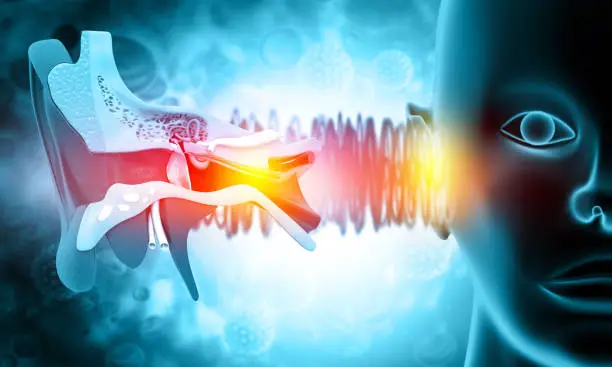
Of all our sense organs, only the eye is as complex, as finely balanced as the ear. Our hearing mechanism consists of three parts: the outer, middle and inner ear. The outer ear comprises the curled shell on the side of the head-for collecting sound waves-and an ear canal- little tunnel about an inch long that ends at the eardrum. Tissue-thin and the diameter of a pencil, this membrane is stretched tight, like a drumhead, and lies between the outer and middle ear.
The middle ear occupies a hollow cavity large enough to hold four or five drops of water. Arching across the air space is a chain of three tiny bones: the hammer (malleus), anvil (incus), and stir- so named because they resemble these articles in rup (stapes), miniature. At the outer end of the chain, the handle of the ham- mer is fastened to the eardrum. The chain’s inner end, formed by the footplate of the stirrup, is fastened to another membrane. This membrane, the oval window, is the diameter of a pinhead. It separates the middle-ear cavity from the fluids and spiral canals that form the inner ear and control our sense of balance.
In the hearing process, sound waves funnel into the ear canal, Strike the eardrum and make it vibrate. The vibrations travel along the bony chain to the oval window, which transmits the vibrations to the inner ear. There, by nerve endings whose magic is as yet little understood, the vibrations are translated into im- pulses and flashed along the 30,000 fibers of the auditory nerve to the brain.
With such an intricate and delicately wrought organ, many things can go wrong. The two major types of impairment are conductive deafness, and perceptive (or nerve) deafness. A com- bination of the two is called mixed deafness.
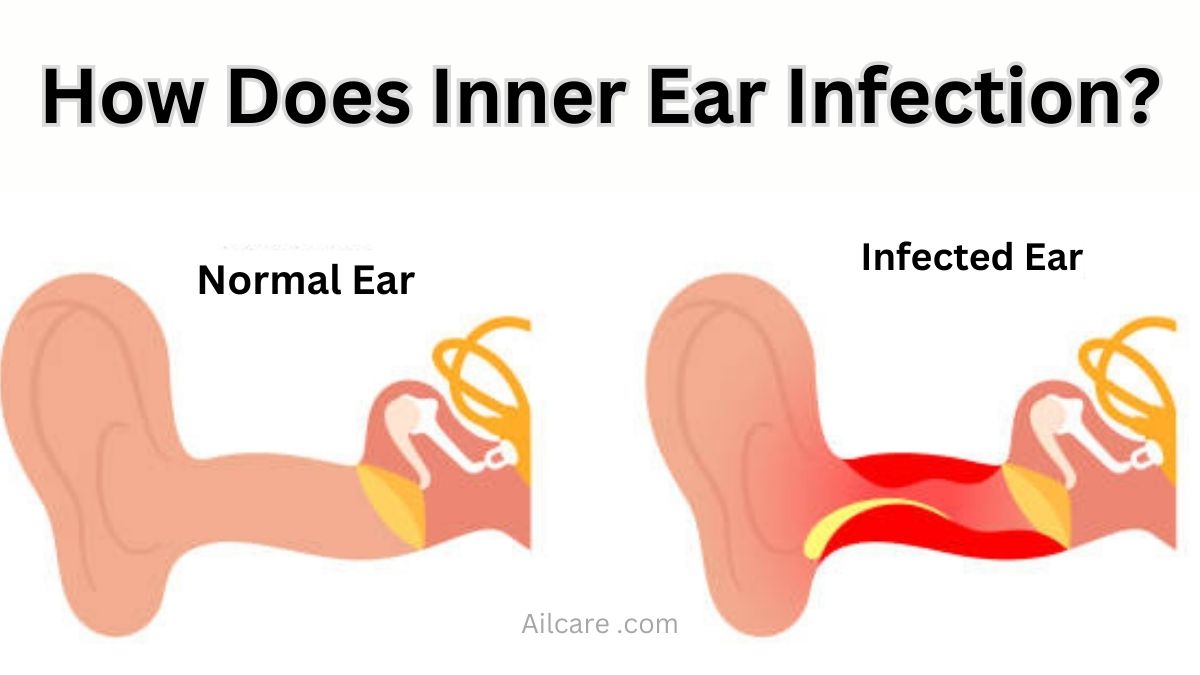
Conductive deafness occurs when sound waves are unable to reach the inner ear. It may be caused by foreign objects, excessive wax or liquid, otosclerotic bone growth, breaks in the chain of bones, infectious swelling of middle-ear tissue. One ear special- ist says that conductive deafness is like trying to hear a piano being played under a heavy blanket.
Such interference, however, seldom causes complete deafness. (Less than one in a thousand of the population is totally deaf.) One reason is that skull bones themselves conduct vibrations to the middle ear. Test it for yourself. Close an ear, then hold a watch against the mastoid bone behind that ear. The ticks will come through clearly.
Bone conduction explains why many victims of conductive deafness hear their own voices quite loudly, and consequently speak so softly. They frequently hear well over the telephone, because the receiver is clamped to the big temporal bone encasing the ear; but they have trouble hearing television or a church sermon, whose sound waves travel to them through the air.
In perceptive (or nerve) deafness, the outer and middle ear function normally, but certain vibrations can go no farther. Circuits to the brain are out of order. What’s wrong? Damage, in most cases, to nerve endings of the inner ear, fibers of the audi- tory nerve, or hearing centers of the brain itself. Causes vary. They include loud noises, head injuries, tumors and some diseases.
How Does Inner Ear Infection?
Nerve deafness generally results in impaired hearing of high- frequency sounds–sounds formed by a relatively high number of cycles, or vibrations, a second. In conversation, speech tones frequently missed by the nerve-deaf are ps, ks, ts, hard cs and gs, and ds. They may, for instance, hear gain as “-ain,” call as “-all,” down as “-own.” They complain that their friends or relatives mumble. “I can hear you all right,” they say, “but you’re not making sense.
And to them, you aren’t. Secretaries in early stages of nerve deafness begin to falter in dictation. Because bone conduction is of little help, victims hear poorly over the telephone and may miss vital words and phrases. Their own voices sound faint; un- consciously, they speak too loudly.
Since nerve damage cannot be repaired, nerve deafness presents serious obstacles to successful medical or surgical treatment. But army and navy specialists worked near wonders in rehabilitation with servicemen deafened by shell-fire and explosions during the last war. As a result of their new techniques in speech reading (lip-reading), speech analysis and auditory training, the nerve-deaf today, particularly children, stand a better-than-even chance of overcoming their handicap.
What about hearing aids? Or Inner Infection
What about hearing aids? Tiny transistorized devices-hidden behind a neck-tie, built into spectacle frames or worn inconspicuously over the ear-are an indispensable help to thousands with impaired hearing. But experts urge the handicapped to consult an ear specialist before buying one, and to be realistic in their expectations. “Hearing aids can be a great boon, and are a major means of coping with hearing loss, but they’re not perfect,” says a noted specialist. “They remain, after all, an ‘aid.’ They will amplify sound so that you can use it, but don’t expect them to restore normal hearing.” If fitted early enough, most handicapped children of average intelligence can learn to use hearing aids.
How early? Experts recommend, “As early as possible.” Two- and three-year-olds have used them successfully. Even more dramatic, however, have been advances in micro- surgery. Today, using an operating microscope and working freely in the cramped galleries of the ear, surgeons restore hearing to patients whose impairments a few years ago were written off as hopeless.
The ear specialist can build a new eardrum with a graft of skin from the ear canal. If the hammer, anvil or stirrup-or any com- bination of them-has been destroyed, he can reconstruct the drum and middle-ear lining with mucous-membrane grafts from cheek or lip, and restore transmission of sound vibration. In extreme cases where the entire chain has been destroyed, he can sometimes fashion a middle-ear chamber that gets along without one.
These developments are encouraging ear specialists to step up the attack on other questions of vital concern: What causes otosclerosis? How does the inner ear transform sound vibrations into nerve impulses? What is the significance of the electrical signals, or potentials, emitted by the inner ear? The terrible barrier of silence is being crossed in new and wonderful ways. As researchers probe more deeply into the mysteries of hearing and the mechanism of the ear, it is certain that still greater triumphs lie ahead.
How Does Inner Ear Infection? How Does Inner Ear Infection? How Does Inner Ear Infection? How Does Inner Ear Infection? How Does Inner Ear Infection? How Does Inner Ear Infection? How Does Inner Ear Infection? How Does Inner Ear Infection? How Does Inner Ear Infection? How Does Inner Ear Infection? How Does Inner Ear Infection?
Topics of General Science & Ability (CSS)