
Throat , On any morning in winter many thousand Britons wake up with sore throats. No other ailment save its frequent companion, the common cold, is so much with us. Yet because its victims are so numerous and their misery so familiar, there is a tendency to regard it as an annoying but trivial illness. The truth is that the sore throat is perhaps the most important alarm signal in the human body a warning that carriers of disease have penetrated the body’s outer defenses and are gathering strength to press their assault farther.
The word “throat” covers several separate structures linked by a system of valves-raising and lowering and squeezing devices that permit us to breathe, talk, eat and drink. Clog one of these for an instant and life is jeopardized. Alter their amazing anatomical arrangement by a fraction of an inch and the world would be reduced to sign language.
The tissues of the throat are delicate but remarkably durable. Protected by only a thin sheet of mucus and saliva, they endure temperatures ranging from ice cream at 8° Fahrenheit to coffee at 160°. Every fifteen seconds air swishes past them at ten miles an hour; a sneeze or cough rips through at a speed as high as 200 miles an hour.
In one day they are exposed to about 3000 gallons of oxygen and carbon dioxide and some thousand million dust particles. In addition to the traffic exhaust fumes that permeate the air most of us breathe, a heavy smoker’s tissues must face the onslaught of parching, tar-laden smoke. The complex chain of events we call the swallow, which requires the split-second
teamwork of about thirty pairs of muscles, takes place about 3000 times a day. And unless the throat’s owner is a hermit, it will also be called on daily to carry out the rapid-fire muscular expansions and contractions necessary to form more than 25,000 words of talk.
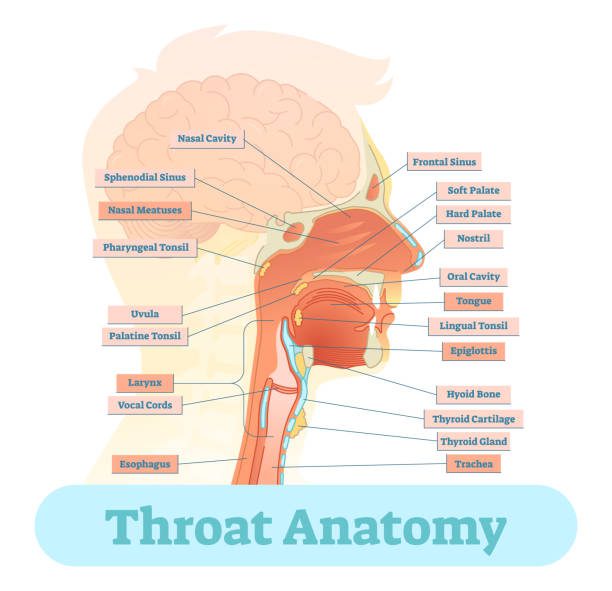
Let’s look at the chronically overworked structure of Throat. Open wide in front of a mirror and the most you will see is the tip of the soft palate hanging from the roof of the mouth. But if you had a doctor’s tongue depressor, you could flatten out your tongue long enough to glimpse a bit of the middle portion of the throat, called the pharynx-a sort of cross-roads of the windpipe, nose, mouth and esophagus.
On each side of the pharynx you might see twin beds of soft tissue called the tonsils. With a specialist’s long, Slender mirror and forehead light, you could see a reflected view of the larynx (Adam’s apple) with its two taut, ivory-white vocal cords.
It is in the hollow larynx, or voice box, that the column of air pressed upward from the lungs is transformed by the cords, vibrating like rubber band, into high- and low-frequency sound waves. These vibrations, in turn, are molded into words by the rapid muscular action of the walls of the throat, the soft palate, tongue, lips and teeth.
Because the larynx is constantly exposed to germ-laden air and smoke and because many of us abuse our voices, the laryngeal tissues and vocal cords often become so inflamed that the voice is reduced to a hoarse whisper or is lost altogether, a condition known as laryngitis. But hoarseness does not necessarily imply infection.
It may be due to emotional problems which cause a tightening of the throat muscles and disturb the delicate vibrations of the vocal cords, thus altering the volume and pitch of their sound waves. Suppressed rage and tension may cause the voice to become harsh and shrill; deep-seated fear or guilt may make it thin, shaky and high-pitched. Even total loss of voice can occur in a perfectly normal larynx that is paralyzed by acute anxiety.
The Throat is not only overworked, it is also crowded, becoming within a few hours after birth the domain of millions of germs which swarm in the air we breathe and in the food we eat. Here the skirmishes with most internal infections are fought out, and the result determines whether or not the attacking organisms will succeed in reaching other parts of the body.
Among diseases often ushered in with a mildly inflamed throat are influenza, poliomyelitis, meningitis, scarlet fever, whooping cough and measles. And the dangerous acute inflammation known as a streptococcal sore throat or “strep Throat,” if unchecked, may progress to rheumatic fever, which sometimes leads to crippling damage to the heart.
The throat’s passageways also offer choice routes for invading microbes to spread into the upper nasal passages to cause acute sinusitis, into the middle ear and mastoid bones to cause abscesses and deafness, and down the trachea into the lungs to bring on pneumonia and pleurisy. When the throat is attacked by the virus that causes the common cold, the growth of bacteria already residing in it immediately increases and may bring on attacks of bronchitis, tonsillitis or laryngitis.
This explains the popular misconception that the sore throat is a symptom of the common cold; actually it may be a separate thing, but the two often go together. To counter germs, however, the Throat has a highly effective ring of defence traps. Known as Waldeyer’s ring, this consists of islands of lymphoid tissue whose function is to attract the germs and then to overwhelm them with large numbers of white corpuscles and antibodies rushed to the site via the blood-stream.
The tonsils and adenoids are masses of this spongy lymphoid tissue. They are particularly large during childhood and are often inflamed as they do battle with infectious organisms. Through them most children gain lifelong immunity to many diseases which might cause more dangerous illnesses in adult life. Some times, however, the tonsils, weakened by germ wars, become chronically diseased, and a doctor may recommend surgical removal.
The other key defence mechanism of the throat, particularly important in adult life, is a lining of delicate, reddish mucous membranes which manufacture the watery secretions that keep the throat moist and shield the body tissues from bacteria. The mucus flows as an elastic but continuous film, carrying away the invading germs. Many factors in modern living, however, tend to interfere with this normal secretion.
Tobacco smoke, industrial smog, exhaust fumes and heavy alcohol consumption all irritate the membranes, constrict their blood vessels, dry up the flow of mucus and decrease its effectiveness. Air-conditioning and central- heating systems can wring too much moisture from the atmosphere.
The mucous membranes can also be weakened by faulty diet, chronic fatigue and constant mental stress, which drain the body’s defences. All that is needed then is the triggering action of a sudden change in temperature, or of a wetting or chilling. As this draws the blood to other parts of the body, the blood vessels of the throat constrict, the temperature of the membranes drops and the ever-present bacteria seize their opportunity to attack the tissues.
Sore-throat sufferers have through the years swabbed, sprayed, irrigated and painted their throats. They have sucked on cracked ice, gargled with scalding hot solutions, downed hot toddies, inhaled the dizzying fumes of pine oil and friar’s balsam.
Most doctors admit that the old home remedies and patent medicines can be useful to relieve the symptoms of the sore throat. The chief ingredient in most syrups and drops, they explain, is sugar, a soothing agent which promotes the flow of saliva.
Some contain codeine or its derivatives, which help suppress unnecessary coughing and give the throat’s inflamed tissues a rest. The neck ointments and oils, acting as mild counter-irritants, draw in- creased amounts of blood to the throat region, which is in itself a help.
The principal objection among medical men to the patent remedies is that they encourage a tendency to seek relief at the chemist’s instead of in the one place where it can be quickly and cheaply obtained-at home.
For it is the view of throat experts that the best remedy for the sore-throat victim is simply to stay in bed for forty-eight hours, consume generous portions of a high- protein diet and plenty of fruit juices, stop smoking and keep his mouth shut. In the occasional case of a stubborn infection or an acute inflammation, such as the “strep throat,” a visit by the family doctor should do the trick.
“If you have a sore throat,” says a throat specialist,
“you probably have only yourself to blame for abusing your throat or permitting your body’s resistance to fall below normal. Nature favours neither man nor microbe, and he who is best able to protect himself will survive.”

Throat Diseases
Throat diseases encompass a variety of conditions that affect the throat and nearby structures, including the pharynx, larynx, and tonsils. Some common throat diseases include:
Pharyngitis: Pharyngitis is the inflammation of the pharynx (back of the throat), often caused by viral or bacterial infections. Common symptoms include sore throat, difficulty swallowing, and swollen lymph nodes.
Tonsillitis: Tonsillitis is inflammation of the tonsils, which are located on both sides of the back of the throat. It can be caused by bacteria or viruses and may result in a sore throat, swollen tonsils, fever, and difficulty swallowing.
Laryngitis: Laryngitis is inflammation of the larynx (voice box) and can cause hoarseness or loss of voice, coughing, and a sore throat.
Strep Throat: Strep throat is a type of pharyngitis caused by the Streptococcus bacteria. It can lead to a severe sore throat, fever, and swollen lymph nodes.
Gastroesophageal Reflux Disease (GERD): GERD is a condition where stomach acid flows back into the throat, causing irritation and inflammation. Symptoms may include heartburn, regurgitation, and a chronic sore throat.
Laryngopharyngeal Reflux (LPR): Similar to GERD, LPR is a condition where stomach acid refluxes into the throat and larynx, leading to throat irritation, chronic cough, and hoarseness.
Infectious Mononucleosis (Mono): Mono is a viral infection caused by the Epstein-Barr virus. It can cause a severe sore throat, fever, fatigue, and swollen lymph nodes.
Peritonsillar Abscess: This is a complication of tonsillitis in which pus accumulates around the tonsils, leading to severe throat pain, difficulty swallowing, and fever.
Epiglottitis: Epiglottitis is a potentially life-threatening condition where the epiglottis (a flap of tissue in the throat) becomes inflamed, causing difficulty breathing, high fever, and severe throat pain.
Throat Cancer: Throat cancer can affect different parts of the throat, including the pharynx, larynx, and tonsils. Symptoms may include a persistent sore throat, difficulty swallowing, voice changes, and unexplained weight loss.
If you or someone you know is experiencing persistent throat pain, difficulty swallowing, or other concerning symptoms, it is essential to seek medical attention for an accurate diagnosis and appropriate treatment. Only a healthcare professional can provide personalized advice based on the specific symptoms and medical history.
Treatments
The treatment for throat diseases depends on the specific condition and its underlying cause. Here are some common treatments for various diseases:
Pharyngitis and Tonsillitis:
Viral Pharyngitis: Usually resolves on its own with rest, hydration, and over-the-counter pain relievers for symptom relief.
Bacterial Tonsillitis: Antibiotics are prescribed to treat bacterial infections. It’s important foe patient to complete the full courses.
If tonsillitis becomes recurrent or chronic, a doctor may consider tonsillectomy (surgical removal of the tonsils).
Laryngitis:
Resting the voice and avoiding strain on the vocal cords.
Staying hydrated and using a humidifier to soothe the throat.
Avoiding the smoking and alcohol consumption.
Strep Throat:
Antibiotics (such as penicillin or amoxicillin) are prescribed to treat strep throat to prevent complications like rheumatic fever.
Rest, hydration, and over-the-counter pain relievers for symptom relief.
Gastroesophageal Reflux Disease (GERD) and Laryngopharyngeal Reflux (LPR):
Infectious Mononucleosis (Mono):
Rest and hydration are essential for recovery.
Over-the-counter pain relievers and fever reducers can help manage symptoms.
Peritonsillar Abscess:
Drainage of the abscess may be necessary, often performed by an ear, nose, and throat (ENT) specialist.
Antibiotics may be prescribed.
Epiglottitis:
Epiglottitis is a medical emergency, and immediate hospitalization is required.
Treatment may involve administering intravenous antibiotics and steroids to reduce inflammation.
Throat Cancer:
Treatment options depend on the stage and type of cancer but may include surgery, radiation therapy, chemotherapy, and targeted therapy.
Please note that self-diagnosis and self-medication are not recommended for throat diseases. If you suspect you have a condition or are experiencing persistent throat symptoms, it is crucial to seek medical advice from a healthcare professional. They can accurately diagnose the condition and recommend the most appropriate treatment for your specific case
Patient Care
When it comes to patient care for throat diseases, it’s essential to follow a comprehensive approach to ensure proper diagnosis, treatment, and management. Here are some general guidelines for patient care:
- Thorough Medical History: Begin by taking a detailed medical history from the patient, including information about symptoms, past illnesses, allergies, medications, and lifestyle habits.
- Physical Examination: Perform a comprehensive physical examination, focusing on the throat, neck, and related areas. Look for any signs of inflammation, infection, lumps, or abnormalities.
- Diagnostic Tests: Depending on the patient’s symptoms and examination findings, additional diagnostic tests may be necessary. Common tests include throat swabs for cultures, throat cultures for strep throat, blood tests, imaging (such as X-rays or CT scans), or biopsies for suspicious growths.
- Treatment Plan: Based on the diagnosis, create an individualized treatment plan. Treatment may include medications (antibiotics for bacterial infections, antivirals for viral infections, or anti-inflammatory drugs for throat pain and inflammation), lifestyle modifications, and possibly surgery for certain conditions.
- Pain Management: Provide appropriate pain relief measures to alleviate discomfort and soreness associated with throat diseases. Over-the-counter pain relievers or prescribed medications can be used as needed.
- Hydration and Nutrition: Encourage the patient to stay hydrated and consume soft, soothing foods that won’t irritate the throat. Warm liquids, such as tea with honey, can help soothe it.
- Rest and Recovery: Advise the patient to rest their voice and avoid straining their throat, especially in cases of acute laryngitis or voice-related issues.
- Preventive Measures: Educate the patient about preventive measures to avoid throat infections and irritants. This includes proper hand hygiene, avoiding close contact with sick individuals, and refraining from smoking or exposure to secondhand smoke.
- Follow-up: Schedule follow-up appointments to monitor the patient’s progress and adjust the treatment plan if necessary.
- Referral: If the condition is beyond your expertise or requires specialized care, consider referring the patient to an otolaryngologist (ear, nose, and throat specialist) for further evaluation and treatment.
Remember that each patient’s case is unique, so personalized care and attention are crucial for achieving the best outcomes. Always follow established medical guidelines and consider the patient’s specific needs and medical history when developing a treatment plan.