

Climate Control internally
We human beings are essentially semi tropical animals. Our bodies at rest and unclothed are designed to maintain their internal temperature effortlessly with the thermometer at about 85° Fahrenheit. But built into us are various methods of coping with much lower temperatures methods so effective that South American Indians living in the near freezing temperatures of Tierra del Fuego, near the Antarctic tip of South America, have been able to survive for generations without any clothing what- ever, and with very little shelter.
We achieve cold-weather comfort in part by generating more heat in our internal furnaces, in part by conserving that heat. The most important sources of internal heat are our muscles, which use about 70 per cent of the food energy they consume in the generation of heat. Under average conditions, body muscles produce enough heat to boil a quart of freezing cold water every hour, and when you wave your arms or stamp your feet you stoke your muscle furnaces to a still higher level of heat production.
The extent to which muscular activity enables you to ward off colds has been strikingly illustrated by experiments of Canada’s National Research Council. These experiments show that the same clothing needed to keep you comfortably warm when you’re sitting quietly at 70° will keep you warm at 40° if you’re walking briskly or at 5° below zero if you’re running. If you don’t. Ward off the cold by exercising voluntarily, your muscles take over willy-nilly and warm themselves by shivering. “It’s shivering,” one physiologist has said, “which largely explains why so many are cold but so few are frozen.” Under extreme exposure, in fact, intensive shivering may even save you from freezing to death.
Because your muscles produce more heat in cold weather, they use up more food energy; but nature compensates for this by turning up your appetite a few notches. On the average you eat fifteen more calories per day for every one degree drop in the thermometer. Soldiers allowed to eat as much as they please when stationed in the tropics at 92° have been found to select a diet totalling about 3000 calories daily. In the polar regions at 25° below zero their food intake rises to nearly 5000 calories a day.
Instead of increasing your heat production in cold weather, you can achieve much the same result by conserving what heat there is. One simple method is familiar to everyone: When you are cold you instinctively curl up into a ball, thus reducing the surface area through which your internal heat is dissipated. Less familiar are your automatic blood and skin changes. Ordinarily the blood and skin act as a cooling system like the water in a car radiator: hot blood emerging from your internal organs is cooled by flowing through your skin at the rate of fifty to eighty gallons per hour.
When you are chilled, however, many small blood vessels in your skin close up, reducing the flow to 150 of normal or less, with the result that your skin is converted from a radiator dissipating heat into a blanket that conserves it. The efficiency of this skin blanket depends in part upon the thickness of the fat layer beneath it. In general, persons with well- distributed fat survive extreme cold better than their thinner fellows. But fat people aren’t necessarily more comfortable in the cold. For the nerve endings which complain “I’m cold” to the brain are located near the skin’s surface, and if these endings are insulated by layers of fat from internal sources of heat, a fat man may actually end up feeling colder than a thin one.
Fur insulates the same way. Many animals are able to conserve their body heat by means of tiny muscles which erect the hairs and thus thicken the furry layer when the animal begins to chill.
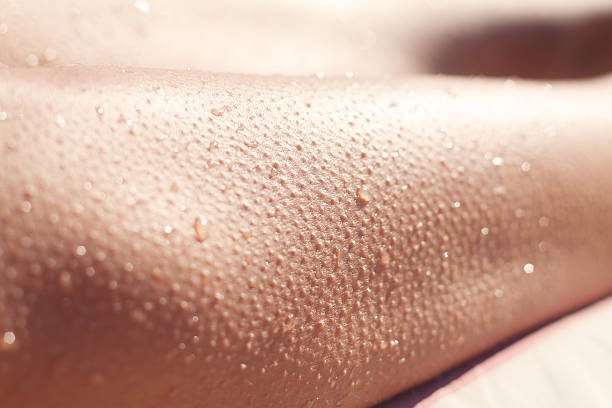
We humans still have hair-erecting muscles in our skin, which contract when we’re suddenly chilled, producing “goose pimples.” Conserving body heat depends in part on what your body or clothing makes contact with. Thus the tile-floor of your bathroom feels colder to your feet than the bath-mat, even when both are the same temperature. Heat flows more rapidly from your skin to a good heat conductor like tile.
Quiet air, fortunately, is a poor conductor of heat-much poorer than water, for example. The human body, which maintains its heat balance without effort in still air at 85° Fahrenheit, requires water at more than 90° to achieve a similar balance. A man may die of exhaustion after sixty minutes in ice-cold water, but he can survive much longer in air at the same temperature. Woollen socks and boots may keep your feet warm at sub-zero temperatures while they’re dry; but if water seeps in, your toes will soon start to numb.
The mother who bundles five-year-old Stevie up in layers of wool before sending him out in the cold to play has forgotten that Stevie is going to run and jump, increasing his internal heat pro- duction many times over, and will soon be perspiring in his heavy togs. When he sits down to rest, his internal heat production falls while his heat loss increases owing to the dampness of his clothing. Soon he comes home, chilled to the bone. A wiser mother sends a child out for strenuous play in relatively light clothing, but with adequate protection for his hands and feet; and she’ll remind him to come in for something warmer if he begins to feel cold.
Whereas quiet air is an excellent insulating material, moving air carries heat away with it quickly. Even a breeze blowing at five miles an hour carries away about eight times as much body heat as quiet air. A soldier’s winter uniform loses about a quarter of its insulating efficiency when he’s walking fast rather than standing, because breezes are generated within his clothing.
The loosely tailored sealskin and walrus-skin clothing of the Eskimoes is very nearly ideal for cold weather. When an Eskimo chases his quarry in a hunt, the chill air flows into and out of his flapping garments to prevent overheating. Later, when he rests, his clothing settles round him and achieves an insulating efficiency that is hard to surpass.
Most of us think of wool as the ideal textile for heat conservation, and scientific studies have confirmed its excellence. Experts point out, however, that the insulating effect is not achieved by the fabric itself but by the air trapped among its fibres. Thickness of trapped air is what counts. Wool’s superiority to cotton, accordingly, is due largely to its springiness. Damp or dry, it tends to regain its thickness more readily after compression, and to trap more air.
Understanding the importance of thickness in clothing has enabled scientists to improve gloves for arctic wear. Our fingers are held partially curved most of the time, yet manufacturers ordinarily tailor gloves to fit the fully extended hand. As a result, most gloves are compressed at the joints and knuckles where our fingers bend and heat leaks out.
Keeping warm while asleep offers a particular challenge. No doubt you have had the experience of falling asleep in a comfort- ably heated room and awakening to find that you’re cold and stiff. The room didn’t chill while you slept; as was to be expected, your internal heat production dropped off. It’s wise to use a cover when you take a nap-even though you’re sure you won’t need it.
Electric blankets may seem an exception to the general rule that bedding and clothing are designed to conserve body heat: an electric blanket feels as if it were sending heat to your skin. But this is an illusion. Such a blanket rarely reaches the temperature of your skin; it slows down the loss of your internal heat like any ordinary blanket. Its chief advantages are that it warms itself, so that you don’t have to curl up and shiver in order to warm it initially from your own inner heat, and it provides a maximum of heat conservation with a minimum of weight.
How much cold can the human body survive?
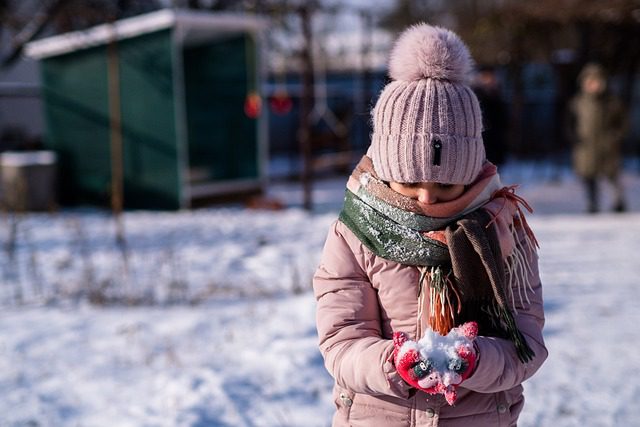
Scientists haven’t answered that question definitely. But when Dorothy Mae Stevens was found unconscious and almost unclothed in an alley one winter morning in 1951, her internal temperature had fallen to 64.4°- more than 34° below normal.
Yet the hospital where she was taken was able to save her life through the skilful use of stimulants, blood plasma, oxygen, anti-blood-clotting drugs and other means. Even more astounding was the 1955 case of two-year- old Vickie Davis, who survived after being found unconscious in her nightclothes with an internal temperature of 60°.
Medical scientists began in the 1930’s to experiment cautiously with a deliberate lowering of body temperature for treating certain illnesses. Because pain is numbed when body temperature drops, internal chilling is occasionally used to soothe some types of otherwise insuppressibly pain. Even more remarkable is the recent successful use of internal cold to control blood flow while delicate operations are performed inside the human heart. With the internal human temperature at 75° or 80° instead of 99°, all bodily processes slow down, and only about a quarter as much oxygen is needed per minute as normally. Thus the flow of blood through the heart can safely be stopped for eight minutes or even more-long enough to enable the surgeon to do his work.
If you’re caught in sub-zero temperatures and reach shelter chilled to the bone, with nipped fingers, toes, cheeks, nose or ears, what should you do about it? Don’t follow Grandma’s suggestion to rub the frostbitten parts with snow or ice. Recent research has shown that the immediate application of warmth leaves you with less tissue damage and less likelihood of infection or gangrene.

First-aid experts now recommend that the victim be brought into a warm room as soon as possible, given a warm drink and either wrapped in warm blankets or else placed in a bath of warm -not hot-water. Just as you lose more heat from your body in cold water, so your body absorbs heat more rapidly from warm water. Too much heat should be avoided-don’t use a heat lamp or hot-water bottle or expose frostbitten areas to a hot stove. And don’t rub or massage a frozen finger, toe or ear. After the part is warmed, however, the victim should be encouraged to move it. The best approach to frostbite is to prevent its occurrence. Dress warmly and dryly enough. Exercise to keep warm, especially your toes and fingers. And don’t be one of those foolhardy heroes who hasn’t sense enough to come in out of the cold.
Climate Control internally Climate Control internally Climate Control internally Climate Control internally Climate Control internally Climate Control internally Climate Control internally Climate Control internally Climate Control internally Climate Control internally Climate Control internally Climate Control internally Climate Control internally Climate Control internally