
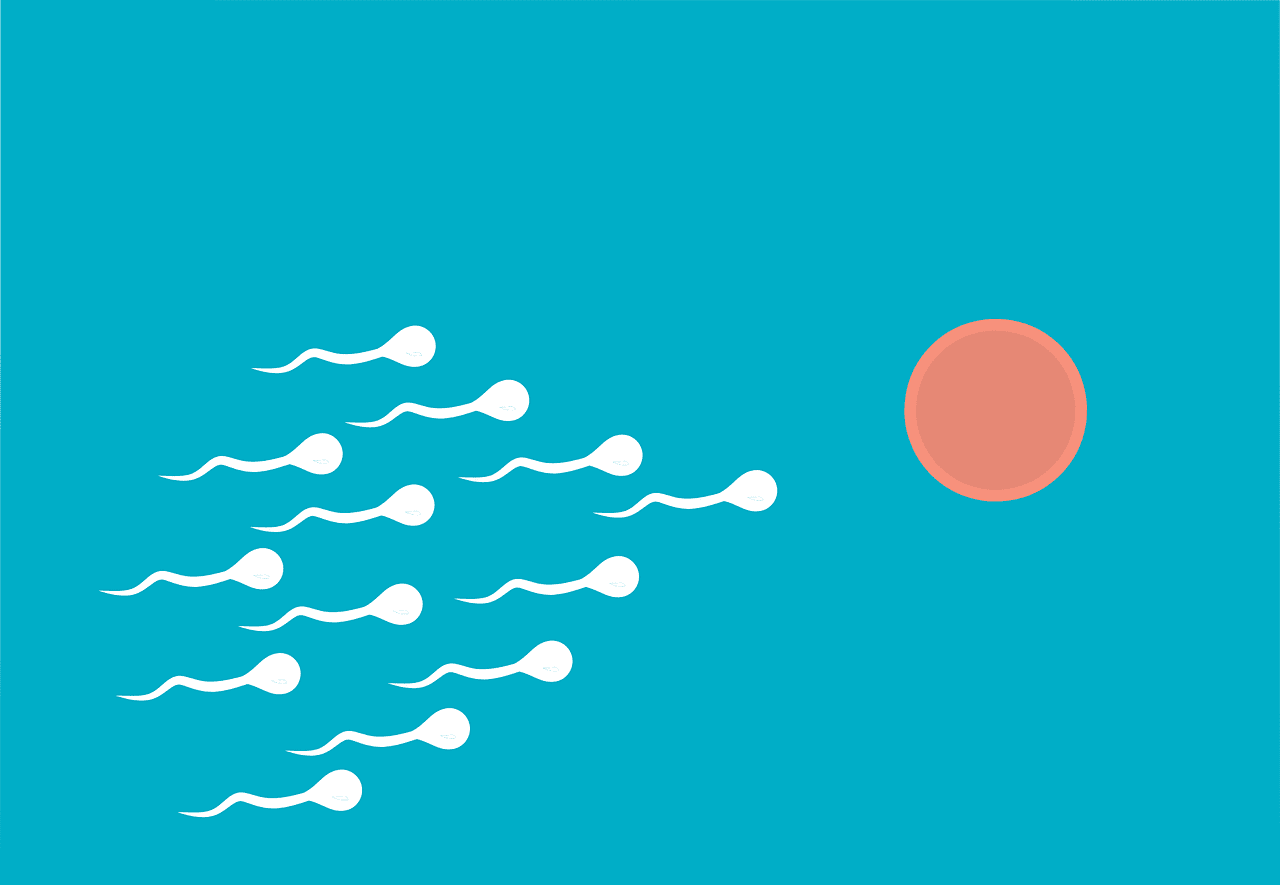
What Is The Human Conception process Of Fertilisation
What Is The Human Conception Process Of Fertilisation of all the millions of cells in the human body?The female egg though barely visible to the eye is the largest, the male sperm the smallest. Apparently a woman is born with a life time supply of immature eggs already present in the ovaries. Normally the two ovaries between them produce one egg a month, with no known pattern as to which ovary is selected each time for the egg producing job. From puberty until ovulation ends, about the time of menopause, a woman will thus produce between 400 and 500 eggs.
Before the egg is cast free from the ovary, a fluid-filled “follicle,” or nest, forms round the immature egg cell. Gradually the follicle enlarges until it makes a bubble like protuberance the size of a large marble. Eventually, its membranes stretch and burst, liberating the egg.The liberated ovum is a tiny glistening sphere about the consistency of hard gelatine. The eggs of all mammals whales, mice, human beings are approximately the same size: two million would fit in a tablespoon.
Cast free from the ovary, the egg appears to face enormous perils. Unless fertilized, it will expire in about twenty-four hours. During this critical period “nurse” cells cluster protectively round it. From the ovary it drifts into the funnel like mouth of the Fallopian tube. The tube warm, moist, dark provides an ideal environment. Gently the egg is moved along the tube, by muscular movements of the tube itself, by fluid currents and by tiny finger like cilia: All this activity has but a single purpose: to move the egg position to meet the sperm. It is in the tube that fertilization takes place. Then, normally, the egg is moved along to the womb.
“The egg contains only microscopic amounts of food a supply of starch, protein and sugar which will last until about the weight when the egg, if fertilized, will attach itself to the wall of the womb and draw on the resources of the mother.In many respects the spermatozoon is even more remarkable than the egg.
It has a minute, oval head and a whip like tail about nine times as long. It is almost incomprehensibly small probably about one 500th of an inch in length. Yet, tiny as it is, the sperm is able to propel itself with its thrashing tail on a journey of staggering proportions for its size. The sperm’s five inch journey to the egg is the equivalent of a man’s five mile swim upstream.
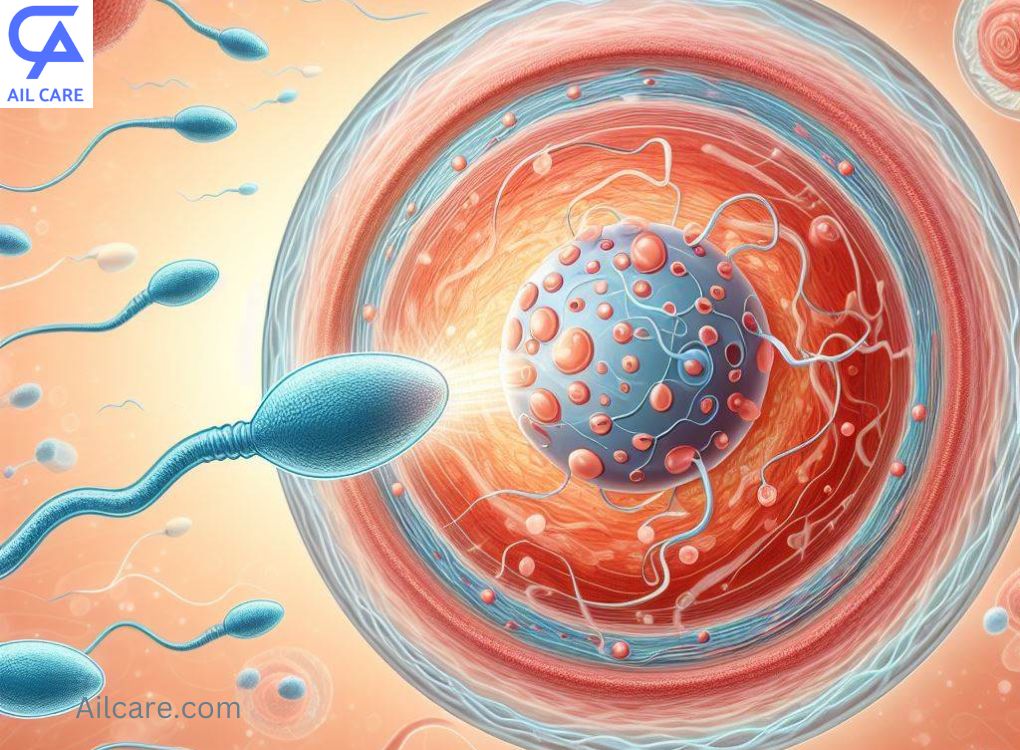
Sperm cells are deposited by most men in overwhelming numbers some five hundred million at a time. There are clearly apparent reasons for the need of so many. In general, the environment they face is hostile. The vagina, where they are deposited, is acid and sperm must have an alkaline environment for survival. When deposited, sperm are almost motionless; within a minute there is an outburst of energy, and the great migration begins.
Of the five hundred million sperm deposited, millions perish in the vagina. For those that reach the cervix, the mouth of the womb, great rigours lie ahead. The pear sized womb must be crossed, where each fold of tissue represents a challenge as great as Mount Everest to a man. Probably not more than a few thousand get as far as the next goal the upper portion of the womb where the two Fallopian tubes splice in. Only a few thousand start the journey up the tubes-fighting fluid currents and half of these survivors will be in the wrong tube, since only one contains an egg.
Although sperm can survive for only a few hours in the hostile environment of the vagina, some manage to live as long as seventy two hours in the womb and tubes-swimming strongly to the last.
Where do these minute, fragile cells get energy for such a prodigious effort? No one is sure. The time required for the sperm to reach the egg and bring about fertilisation has been determined in various animals. In the human it is estimated at some two or three hours. About once in ten times, a woman will deposit two eggs, potential producer non identical twins if both are fertilised.
There are records of two extraordinary cases where such twins did not have the same father readily checked since the fathers were of different racial origins. At other times one fertilised egg, as the result of some unknown condition within the cell, will develop two embryos instead of one in which case there will be identical twins.
The events that take place immediately after sperm and egg meet were first witnessed in 1944 when Dr. John Rock and Miriam Menkin of the Harvard Medical School fertilized four eggs artificially. Recently, Dr. Landrum B. Shettles’s studies at Columbia University have carried the work much further. For example, earlier studies with animals indicated that the egg had a strong attraction for sperm. When sperm is added to a slide containing a sea urchin’s egg, a pell-mell rush is observed under the microscope. It was guessed that this might also happen in humans.
Dr. Shuttle’ findings indicate otherwise. While he watched, sperm swam indifferently past the egg. Fertilisation in human beings, he concluded, is a chancy affair, depending on a random sperm hitting the egg by accident. But once a strike is made, the sperm holds on tenaciously.Most researchers had assumed that once the all important head of the sperm, which contains the nucleus, penetrated the egg, propelling tail dropped off. Dr. Settles found that the entire. sperm entered the egg.Research in recent decades on the egg and sperm has yielded information of immediate usefulness, and greater knowledge of conception is helping childless couples to produce the children they so badly want.
J.D RAT-CLIFF
What Is The Human Conception process Of Fertilisation What Is The Human Conception process Of Fertilisation What Is The Human Conception process Of Fertilisation What Is The Human Conception process Of Fertilisation What Is The Human Conception process Of Fertilisation What Is The Human Conception process Of Fertilisation What Is The Human Conception process Of Fertilisation What Is The Human Conception process Of Fertilisation What Is The Human Conception process Of Fertilisation