
Repelling the Unseen Invaders
RUTH AND EDWARD BEECHER
“NOT sickness but health,” a famous doctor once remarked, “is the greatest of medical mysteries.”
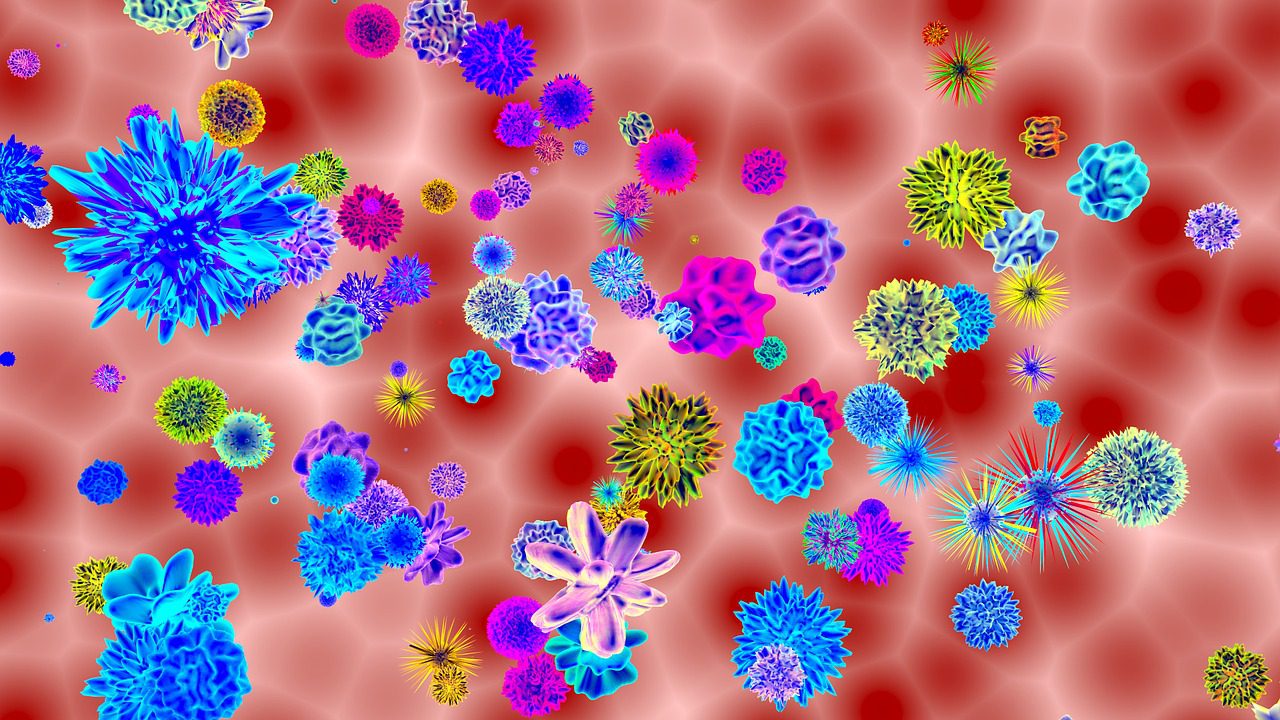
Your own good health is an example. Every day your body is assailed by millions of germs, many of which can produce illness or even death. Yet you stay well. Countless bacteria and viruses gain entry into your body with the food you eat or the air you breathe or through breaks in your skin. Yet you stay well. Some of them establish permanent residence in your mouth, your nose and throat or your intestines, where they may multiply fantastically. Yet you stay well.
What protects you from these ceaseless assaults by bacteria and viruses?Through decades of study scientists have been slowly finding out. Your health is safeguarded, they report, by an ingenious series of defences arranged in depth like the successive lines of an army entrenched to ward off invaders.
Suppose, for example, that a germ laden speck of dust floats into your eye. In all probability there is nothing to worry about. Your eye surface is constantly bathed in tears, which contain a bacteria destroying antiseptic called lysosomes. Lysosomes is so powerful that a single teardrop diluted with half a gallon of water will still destroy at least one species of germs.
Your saliva and the other fluids that are manufactured by your body also contain antiseptic chemicals. Even your bare skin has considerable germicidal power. For example, virulent dysentery bacteria in a drop of fluid placed on a glass slide will survive for hours, while those in a drop placed on the clean palm of your hand will be dead within about twenty minutes.
Some kinds of germs can survive these external defences and even multiply on your skin. Before they can harm you, however, they must gain entry into your body and then run an amazing gauntlet of other defences. Germs entering through your mouth, for instance, are attacked by the antiseptics in your saliva. For those that are swallowed and washed into your stomach, powerful digestive juices lie in wait. Few reach your intestines alive.
Germs which gain entry through your nose must thread the complicated maze of your air filtering nasal passages. The surfaces of these passages are kept moist by a mucous fluid for catching germs. If the germs cause irritation, they are sneezed out; or your nose starts to run and they are flushed out. Germs which manage to reach the tubes to the lungs are also trapped in a mucous fluid, and are coughed out, or if swallowed, meet their fate in the well guarded gastrointestinal tract.
When germs get into your body through breaks in your skin or mucous surfaces breaks so small that they may be unnoticed the peril is seemingly greater.
Let us suppose that you step on a germ laden nail. Each germ thus entering your tissues may divide into two after twenty minutes or so, and divide again in another twenty minutes. If this rate were to continue, you would be host to a million descendants within seven hours, and to several billions the next day. By then your entire body would, of course, be overwhelmed. But before this can happen another type of defence will have come to your aid.
One of the most awe inspiring marvels of life is the ability of the body to renew itself, to repair damage and go forward. Every time you so much as nick yourself with a razor or knife, a construction job far more complex than building a skyscraper gets under way. We take this healing power for granted, yet without
THE WISDOM OF BODY
surgery couldn’t exist; the slightest injury could lead to death.Inflammation begins when various chemicals are released at the site of a germ invasion by the invaders or by the injured cells in your body. These chemicals seep outward in all directions until they reach the nearest blood vessels. There they cause a relaxing of the vessel walls that enables plasma, the watery part of the blood, to seep out. Accompanying the blood plasma are white blood cells called leukocytes, and various chemicals that curb bacterial growth.
Leukocytes are among the most curious and most effective of your body’s defenses. In appearance they resemble the one-celled animal called amoeba, and like the amoeba they can propel themselves from place to place within your body. In some way not yet understood, leukocytes are attracted as if by a magnet to the site of a bacterial invasion. When they arrive they gobble up any invading particles they find.
It is fascinating to watch this gobbling up process through a microscope. A leukocyte slithers up to an invading bacterium, crowds it against a solid surface, then flows its jelly-like body round the bacterium to “corner” it. Next it opens a hole in its skin-like membrane, and the bacterium is completely engulfed. A moment later the leukocyte slithers off after its next quarry. Frequently many millions of leukocytes are mobilised at the site of an infection.
Other factors involved in inflammation help the leukocytes in their work. In the blood plasma is a chemical called fibrin, which quickly solidifies into a network of strands and, with other plasma substances and the leukocytes, forms a wall round the battlefield, trapping the germs so that the infection is localise. Boils and abscesses are typical examples of how this walling off process safeguards the rest of your body from germ invaders.
Even though bacteria are thus contained, the resources of your entire body are mobilised to defeat them. Some of the chemicals released during the battle enter your blood stream and carry the alarm to storehouses throughout your body where leukocyte reserves are maintained. Within minutes millions of additional
REPELLING THE UNSEEN INVADERS
leukocytes are released into your blood stream, which carries them to all your tissues. While this is going on, your bone marrow is also alerted and it speeds up the manufacture of new leucotomy reserves.
Some germs are coated with a repellent which keeps leukocytes away, and some have the power to kill the leukocytes that engulf them. Even in death, however, the leucocytes continue to release chemicals injurious to germs.
If the leukocytes cannot complete the mopping-up operation, they are joined by larger (but still microscopic) cells called macrophages. These can gobble up not only bacteria but also leukocytes that are harboring bacteria.
Usually when a leucocyte or a macrophage engulfs a germ it means death to the germ, but not always. Some bacteria can sur- vive for long periods within cells which have gobbled them up. Indeed, a cell may occasionally prolong the life of a bacterium by protecting it from antiseptic blood substances and from the drugs your doctor prescribes to help combat the infection. Your body requires a way to dispose of these germs after they have been engulfed, and to get rid of other waste products.
To provide for this, your body tissues are drained by a network of channels called the lymphatic system. Leucocytes, macrophages and invading particles enter the vessels of this network and are carried by the lymph fluid to “regional lymph nodes,” or glands, situated at strategic points throughout your body. Each node serves as a filter, holding back bacteria and other particles. The lymph fluid flows on from one node to another until it is eventu- ally discharged into the blood-stream. By then, generally, all germs have been filtered out of the lymph fluid.
Even if a few germs reach the blood-stream, another line of defense stands ready. Your bone marrow, liver, spleen and a few smaller organs are equipped with multitudes of macrophages to filter invading particles out of your blood just as the lymph nodes filter your lymph fluid.
How are the leukocytes and the macrophages able to distinguish between invading germs or other particles and the cells molecules of your own body? Your body has a built in identification system which labels invading particles. These labels, which attach themselves to invaders, are called antibodies. Leukocytes and macrophages will occasionally engulf almost any particle they come upon, but the ones they search out and devour with the greatest voracity are those which have been labelled as invaders by antibodies.
Most cases of recovery from an infection are traceable in large part to antibody action. If you have never had scarlet fever, your body lacks antibodies tailored to fit the streptococci which cause that disease. But if streptococci secure a sufficient toe hold in your body to multiply, your antibody factories start tooling up.
For several days, perhaps, the germs continue to multiply and you get sicker and sicker. By the end of that time however, full-scale antibody production has begun and antibodies are turned out in large amounts. These latch on to the scarlet-fever streptococci which, as soon as they are labeled, fall prey to the voracious leukocytes and macrophages, and your recovery begins. Other substances in your blood help out by destroying bacteria to which antibodies are attached.
It is chiefly your antibodies which make you immune to second attacks of many common illnesses. The first time you suffer from a disease such as scarlet fever or measles your antibody factories take several days to learn the right pattern. Once the lesson is learned, however, production can begin much more promptly, and large amounts of antibodies of the desired pattern may be turned out within a few hours after the entry of a few thousand germs.
Repelling the Unseen Invaders
Thus the second invasion and subsequent entries of a particular type of germ are frequently wiped out before you even suspect that you’ve been infected.
Antibodies are also the agents which make it possible to control infectious diseases through vaccination. A vaccine is a substance which teaches your body in advance how to manufacture anti- bodies promptly against a disease you have not yet encountered.
A few kinds of germs have learned how to evade our antibody defenses. The influenza virus is the most striking example. Every few years a type of flu virus comes along which is unaffected by the common flu antibodies. When this happens, an influenza “pandemic” sweeps the world, as with the “Asian flu.” Within a few years almost everybody gets the new kind of influenza and develops antibodies against it whereupon a different virus pops up. Each type of influenza requires a separate antibody.
Most of the antibodies circulating in your blood are found in a part of the blood plasma called gamma globulin. This antibody- rich substance can be extracted from the blood of donors and stored for considerable periods. Small injections of gamma globulin will provide temporary immunity to measles and infectious hepatitis; the “borrowed antibodies” in the gamma globulin act in just the same way as the antibodies you manufacture yourself.
New-born babies also stay well on borrowed antibodies. Their antibody factories operate poorly or not at all during the first few weeks of life, but antibodies received from their mothers before birth protect them for a time from most of the diseases to which the mothers themselves are immune. Babies also get protective antibodies in mother’s milk, especially in the milk secreted during the first few days of nursing.
THE WISDOM OF THE BODY
Some germs attack only cells in their immediate vicinity; others release poisonous substances called toxins which may circulate to other parts of your body. Diphtheria and tetanus bacteria are examples of these toxin producers. When attacked by toxins your body manufactures antitoxins that is, antibodies against toxin molecules. And just as you can be immunized against virus diseases by means of vaccines containing denatured viruses, so you can be immunized against diphtheria and tetanus toxins by injections of denatured toxins and toxoids.
In the economy of the body a wound always gets first priority. Even people starving in concentration camps during the war retained the ability to heal. Whatever materials are needed for the healing process are provided by tearing down tissues elsewhere in the body. Thus, muscle is broken down into amino acids, which build new tissue at the wound site. That is why badly injured people “waste away.”
Gradually a wound fills with granulation tissue-a beefy, spongy patching material which will be replaced by firm, fibrous scar tissue.
The construction of new tissue is one of the true wonders of nature. In response to some mysterious directive force, fiber cells arrange themselves in neat geometric patterns, like chemical crystals.
Since these more complex tissues need a reliable blood supply, an intricate plumbing system of capillaries must be installed. Research workers can watch this when the ear of a rabbit is injured: little blood vessels, so delicate that they bleed at the touch, start drilling their way through the new tissue. Their ends remain sealed, otherwise blood would leak away. Progressing in random fashion, they finally strike another capillary. The ends magically dissolve and the two join, laying down the elements of a new circulatory system. By a process still more complex, nerve tails push their way into the new tissue.
REPELLING THE UNSEEN INVADERS
All this has been taking place deep under the scab. Meanwhile directly beneath the scab, new skin is forming. Round the margins of the wound, skin cells start playing their all important role. They start elongating-reaching their way towards the centre of the denuded area, just as bark grows over a blaze on a tree. The first skin to cover the wound is thin, fragile, living. Eventually it will mature, with uppermost cells dying and hardening to form a permanent, inert covering. A week or so after the injury the wound looks healed. Actually, some of the most remarkable steps in the healing process are to come.
In the months following injury, tiny muscle fibers start growing outward from either side of the wound, finally meeting and splicing together. Fat joins to fat, connective tissue to connective tissue. In time, perhaps a year, the scar tissue is replaced by functioning tissue. The reconstruction job is completed. Could mankind survive without the human body’s miraculously coordinated “defense in depth”? It seems unlikely.
Topics of General Science & Ability (CSS)